Long rides are physically demanding. To keep going hour after hour after hour does need some strength of muscles, capacity of lungs, hardiness of limbs. Preparing for the physical challenge is quite straightforward: cycle, cycle a lot, train your fitness, the earlier you start the better. Your progress is measurable in the number of hours spent exercising, the challenges you can conquer, the distance you can go. It is a satisfying, self-perpetuating circle where the stronger you are the more you want to do.
Yep, sure. That’s the fun part. But there’s a little more to it than that.
In reality, training long and hard for a long and hard distance ride is about psychological resilience. You’ll be pushing your body beyond what it is used to, repeatedly, for a long time. Your mind will clock onto this and will probably try any devious tricks it can think of to avoid more training. You’ll suddenly think of all the other Highly Important Things you should be doing instead. And besides, you already went for a ride last Sunday, so skipping today’s training won’t hurt will it? Lots of training means lots of time spent in solitude (because no one will join you free-willingly) and in foul weather (most likely). It is boring and tedious and long.
This is where the mental fortitude comes in. Otherwise known as stubbornness. Extreme, resolute, narrow-minded stubbornness. Stubbornness will get you out the door for yet another loop round the hills in the rain. Stubbornness will make you do it again the next day. Stubbornness will make you say no to that enticing social engagement in the warm and dry when you know you should be riding.
So, how should you cultivate your stubbornness? Each to their own, of course, but here are some things which helped me prepare for cycling from the end of Cornwall to the end of Scotland.
It’s much easier to stubbornly do your training if you don’t have to think too hard about it. This is where a training plan can become a loyal companion to your stubbornness, not only your fitness. Plan your training sessions and training routine long before your long distance ride. Use up all the effort of decision-making in one go then you won’t have the same battle before every bout of exercise. It is decided, the session will happen, end of. Then watch as the hours of exercise build up and your fitness increases, with only physical effort on your part. This is a wonderfully lazy way to approach training. Like deciding what meals to cook for the next several days (or just cooking one big pot of something). The decisions are all made and all you have to do is do them. I roughly followed a plan someone else had made in my own training. All I had to decide was whether to follow the plan or not, and then what direction to cycle out of Falmouth. Easy.
It is also much easier to be stubborn if you know why today’s training really is worth you doing. So break it down and turn that nebulous idea of a Long Ride in the long distant future into little chunks that you can actually complete. You can allow yourself the steady satisfaction of having achieved something, even though it’s just one ride, and even though you’ve still got ages to go. You can banish those agitated thoughts of not having done enough, or gnawing guilt at a necessary rest day. It’s all in the plan!
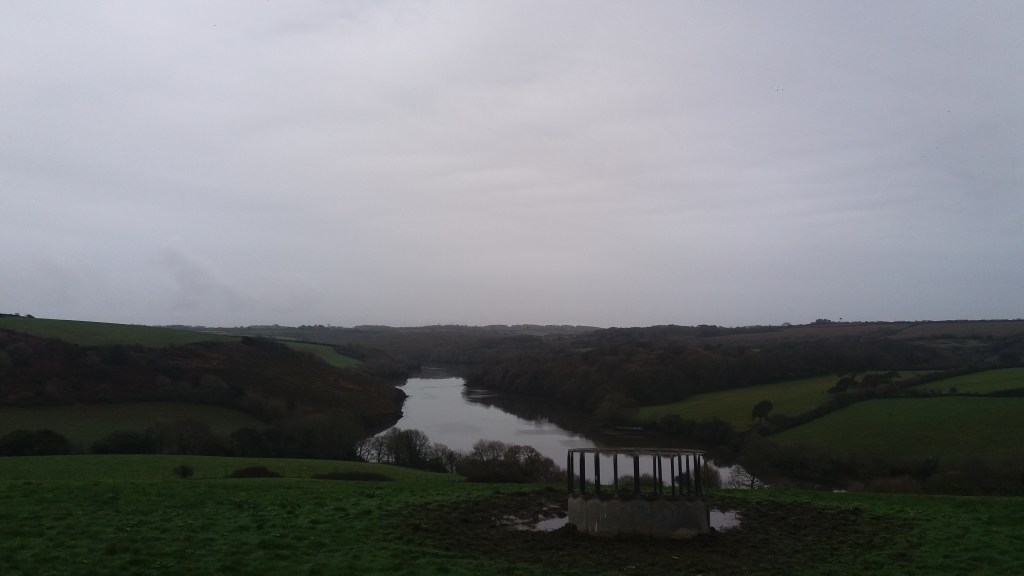
But one person’s idea of a reasonable plan to stick to may be very different to another’s. Know yourself and your weaknesses. If you are not and never have been a morning person, don’t expect to suddenly be able to squeeze in a regular ride before breakfast for weeks on end. Plan your exercise when you are most likely to actually want to do it anyway. Make it easy for your stubbornness to hold fast. If you have a favourite café to stop at or tree to sit under or view to marvel at, let yourself ride there. I found a route I love to cycle on repeat in my own training. This route had all sorts of dips and tucks and hidden streams, away from the busier traffic, with one or two hills to make it worth the while. And it changed every time I cycled it. Sometimes the hills in the distance would be so shrouded in cloud and the world so grey I would hardly recognise it from the time before when the hedges and trees and fields were basking in blanching sunshine. There’s no point in throwing extra hurdles in the way of an already difficult challenge. Chocolate rewards may also play a big part in this.
What do you do though, if your training plan gets broken? How do you pick yourself back up and keep going? Injury flummoxed my own training plan. I could hardly walk five weeks before my long ride was due to start. Stairs were an embarrassment. Cycling was a big no. And I was seriously frustrated.
First of all, if you are in pain, stop and reassess. Sounds simple, but that stubbornness you’ve been cultivating will be telling you to keep going even if it hurts. There’s good pain and there’s bad pain. Good pain is that ache after a long ride that tells you you’re getting stronger. Bad pain will only get worse and you’ll only get weaker by pushing it. Stop and work out what sort of pain you’re feeling before you do anything else. Maybe a rest will fix it. Maybe it won’t, but you won’t know unless you try.
Second of all, forget the old training plan without regrets or guilt. The challenge has changed, so change your plan with it. I couldn’t cycle, but I could swim after a week of healing. So swim I did. After a couple of weeks, I even managed to push myself into the gym where I could cycle without fear of getting stranded on a hill somewhere. Why anybody would willingly go to the gym is still beyond me though. That tangy odour of other people’s sweat… the lack of a breeze to dry your arms and face… the mirrors on all sides to show you just how sweaty you are… the loud music and bright lights from TV screens… I may well have been the only one in the whole gym steadfastly listening to audiobooks to drown everything else out. Fortunately it was just a short plan to keep me fit enough to at least attempt the first day of the long ride.
Third of all, use your now pretty robust psychological resilience to be kind to yourself. If you can’t do the training and can’t do the long ride you wanted to, so be it. Nevermind. We can all ruminate on the ‘What if’s’ of a difficult situation, and we can all push ourselves further than is sensible or healthy. Learning to stop when it is time to stop is a strength all by itself. I had to accept that I might not be able to do my long ride, even though it would be awesome. But accepting that let me take some of the pressure off myself and replace it with a little more optimism. So what if it didn’t all go to plan? I could still have a nice time swimming, and I could still give the ride a go and see where I ended up. I ended up at the end of Scotland, much to my own surprise.
How do you apply all these lessons in psychological resilience and stubbornness training to your long ride? Everything you’ve learned during training can be applied to your long ride (whether it is the long ride you originally planned or not). You’ve already faced many days when you didn’t want to cycle but did anyway. You know how to keep going and work to your strengths. You also know that rest is necessary to keep you going. You know how to be kind to yourself and congratulate yourself for all the little achievements. Most importantly, you can allow yourself to enjoy the ride because you are wise enough to know when to stop too.
Good luck, and treasure all those moments out on your wheels, wherever you may be!
[Article originally written for the Falmouth Wheelers annual newsletter, 2019]
 ArchaeoCyclist