Long rides are physically demanding. To keep going hour after hour after hour does need some strength of muscles, capacity of lungs, hardiness of limbs. Preparing for the physical challenge is quite straightforward: cycle, cycle a lot, train your fitness, the earlier you start the better. Your progress is measurable in the number of hours spent exercising, the challenges you can conquer, the distance you can go. It is a satisfying, self-perpetuating circle where the stronger you are the more you want to do.
Yep, sure. That’s the fun part. But there’s a little more to it than that.
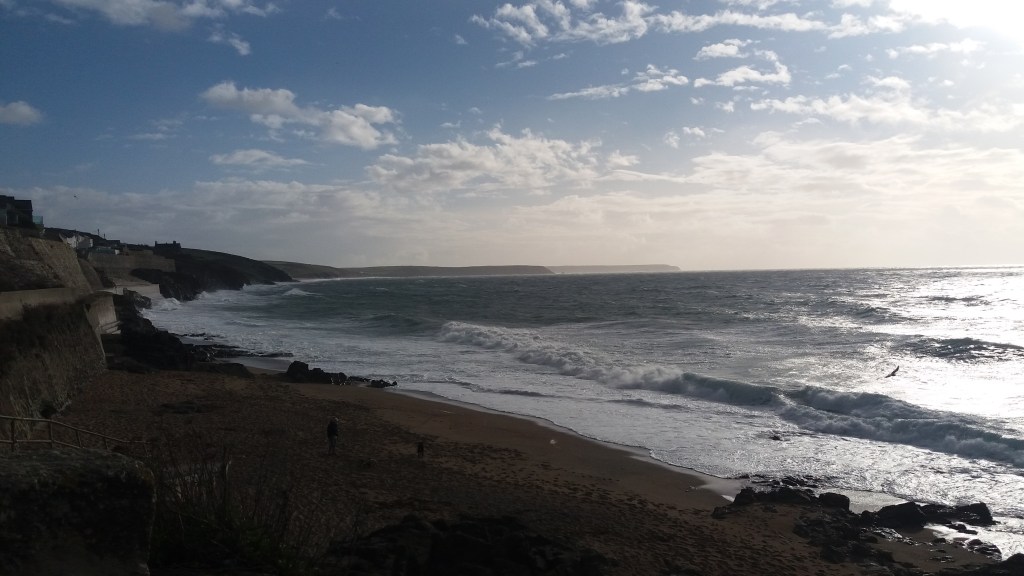
Porthleven, on a windy cycle ride
In reality, training long and hard for a long and hard distance ride is about psychological resilience. You’ll be pushing your body beyond what it is used to, repeatedly, for a long time. Your mind will clock onto this and will probably try any devious tricks it can think of to avoid more training. You’ll suddenly think of all the other Highly Important Things you should be doing instead. And besides, you already went for a ride last Sunday, so skipping today’s training won’t hurt will it? Lots of training means lots of time spent in solitude (because no one will join you free-willingly) and in foul weather (most likely). It is boring and tedious and long.
This is where the mental fortitude comes in. Otherwise known as stubbornness. Extreme, resolute, narrow-minded stubbornness. Stubbornness will get you out the door for yet another loop round the hills in the rain. Stubbornness will make you do it again the next day. Stubbornness will make you say no to that enticing social engagement in the warm and dry when you know you should be riding.
So, how should you cultivate your stubbornness? Each to their own, of course, but here are some things which helped me prepare for cycling from the end of Cornwall to the end of Scotland.
It’s much easier to stubbornly do your training if you don’t have to think too hard about it. This is where a training plan can become a loyal companion to your stubbornness, not only your fitness. Plan your training sessions and training routine long before your long distance ride. Use up all the effort of decision-making in one go then you won’t have the same battle before every bout of exercise. It is decided, the session will happen, end of. Then watch as the hours of exercise build up and your fitness increases, with only physical effort on your part. This is a wonderfully lazy way to approach training. Like deciding what meals to cook for the next several days (or just cooking one big pot of something). The decisions are all made and all you have to do is do them. I roughly followed a plan someone else had made in my own training. All I had to decide was whether to follow the plan or not, and then what direction to cycle out of Falmouth. Easy.
It is also much easier to be stubborn if you know why today’s training really is worth you doing. So break it down and turn that nebulous idea of a Long Ride in the long distant future into little chunks that you can actually complete. You can allow yourself the steady satisfaction of having achieved something, even though it’s just one ride, and even though you’ve still got ages to go. You can banish those agitated thoughts of not having done enough, or gnawing guilt at a necessary rest day. It’s all in the plan!
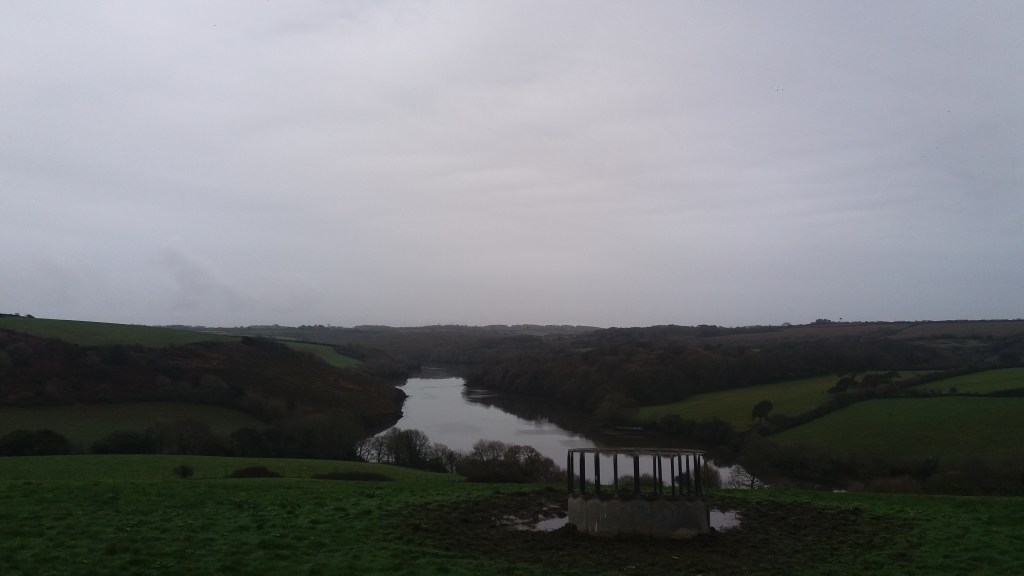
But one person’s idea of a reasonable plan to stick to may be very different to another’s. Know yourself and your weaknesses. If you are not and never have been a morning person, don’t expect to suddenly be able to squeeze in a regular ride before breakfast for weeks on end. Plan your exercise when you are most likely to actually want to do it anyway. Make it easy for your stubbornness to hold fast. If you have a favourite café to stop at or tree to sit under or view to marvel at, let yourself ride there. I found a route I love to cycle on repeat in my own training. This route had all sorts of dips and tucks and hidden streams, away from the busier traffic, with one or two hills to make it worth the while. And it changed every time I cycled it. Sometimes the hills in the distance would be so shrouded in cloud and the world so grey I would hardly recognise it from the time before when the hedges and trees and fields were basking in blanching sunshine. There’s no point in throwing extra hurdles in the way of an already difficult challenge. Chocolate rewards may also play a big part in this.
Mid training loop on a grey day
What do you do though, if your training plan gets broken? How do you pick yourself back up and keep going? Injury flummoxed my own training plan. I could hardly walk five weeks before my long ride was due to start. Stairs were an embarrassment. Cycling was a big no. And I was seriously frustrated.
First of all, if you are in pain, stop and reassess. Sounds simple, but that stubbornness you’ve been cultivating will be telling you to keep going even if it hurts. There’s good pain and there’s bad pain. Good pain is that ache after a long ride that tells you you’re getting stronger. Bad pain will only get worse and you’ll only get weaker by pushing it. Stop and work out what sort of pain you’re feeling before you do anything else. Maybe a rest will fix it. Maybe it won’t, but you won’t know unless you try.
Second of all, forget the old training plan without regrets or guilt. The challenge has changed, so change your plan with it. I couldn’t cycle, but I could swim after a week of healing. So swim I did. After a couple of weeks, I even managed to push myself into the gym where I could cycle without fear of getting stranded on a hill somewhere. Why anybody would willingly go to the gym is still beyond me though. That tangy odour of other people’s sweat… the lack of a breeze to dry your arms and face… the mirrors on all sides to show you just how sweaty you are… the loud music and bright lights from TV screens… I may well have been the only one in the whole gym steadfastly listening to audiobooks to drown everything else out. Fortunately it was just a short plan to keep me fit enough to at least attempt the first day of the long ride.
Third of all, use your now pretty robust psychological resilience to be kind to yourself. If you can’t do the training and can’t do the long ride you wanted to, so be it. Nevermind. We can all ruminate on the ‘What if’s’ of a difficult situation, and we can all push ourselves further than is sensible or healthy. Learning to stop when it is time to stop is a strength all by itself. I had to accept that I might not be able to do my long ride, even though it would be awesome. But accepting that let me take some of the pressure off myself and replace it with a little more optimism. So what if it didn’t all go to plan? I could still have a nice time swimming, and I could still give the ride a go and see where I ended up. I ended up at the end of Scotland, much to my own surprise.
How do you apply all these lessons in psychological resilience and stubbornness training to your long ride? Everything you’ve learned during training can be applied to your long ride (whether it is the long ride you originally planned or not). You’ve already faced many days when you didn’t want to cycle but did anyway. You know how to keep going and work to your strengths. You also know that rest is necessary to keep you going. You know how to be kind to yourself and congratulate yourself for all the little achievements. Most importantly, you can allow yourself to enjoy the ride because you are wise enough to know when to stop too.
Good luck, and treasure all those moments out on your wheels, wherever you may be!
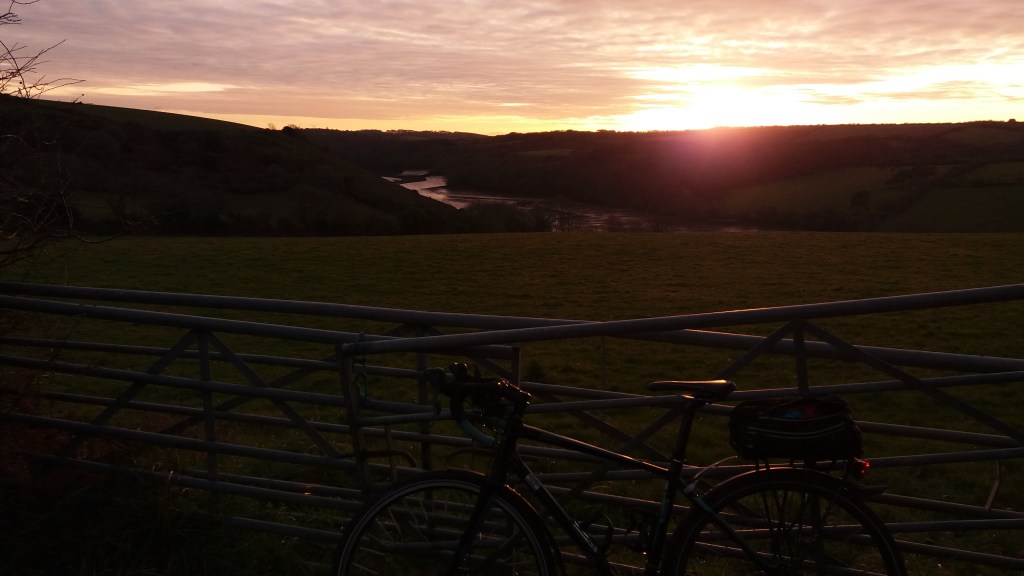
Mid training loop on a very not grey day
[Article originally written for the Falmouth Wheelers annual newsletter, 2019]
The tales and travails of another long distance ride shall be described here. This one was a very different pace to the very-long-and-exhausting Land’s End to John O’Groats ride of the previous several writings. Rather than race over as much distance as possible, my wonderful friend Kate and I decided that we’d much rather lean on the ‘touring’ part of cycle touring. We both love the scenery of Scotland, we both enjoy a bit of flying-by-wheels, both love a little creative project (writing for me, photography for Kate), but neither of us had cycled with our homes and larders strapped to the bikes before. So, off we headed to do a nice gentle tour of the Outer Hebrides.
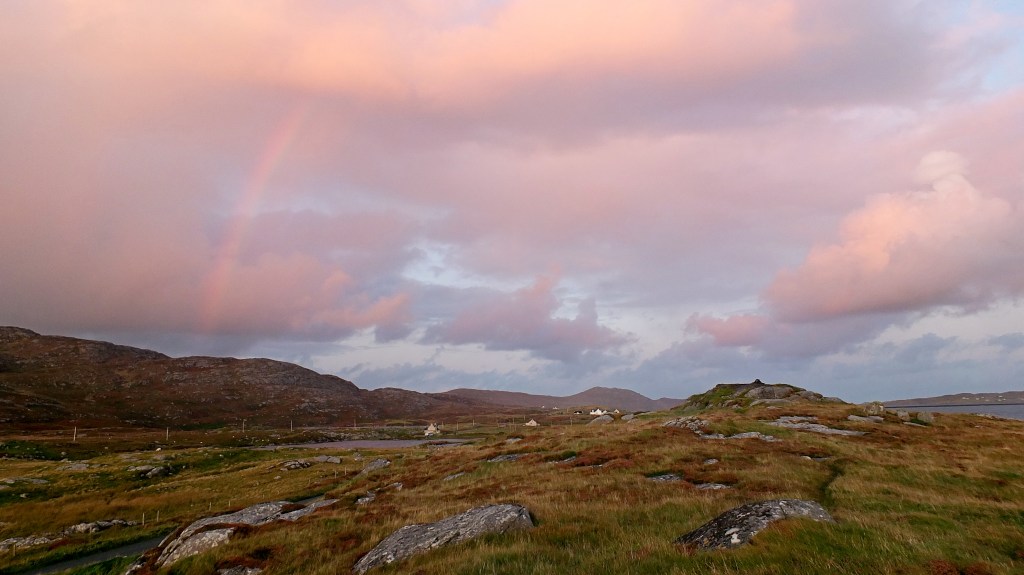
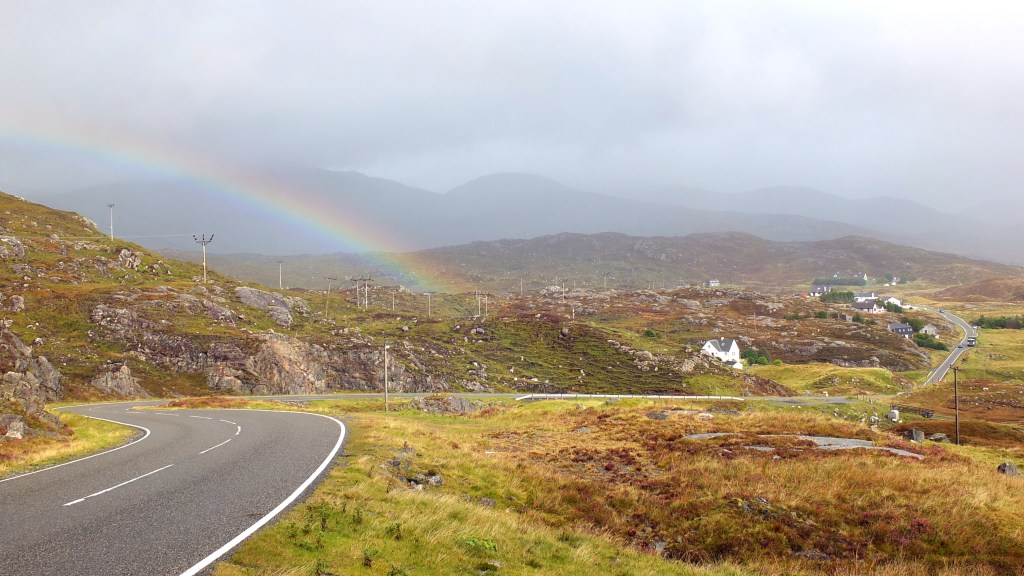
We hauled our bikes on the train to Oban, hauled them off and on to the ferry to Castlebay to begin our tour from the southerly islands. That ferry journey in itself deserves some mention first though. Rather naively, I had not worked out that a five hour ferry journey westwards from the edge of Scotland would mean travelling across the Open Atlantic. I thought it would be five hours of a little chuggy ferry boat, thinking very much of the little chuggy ferry boats I know from Falmouth. It was not a chuggy little ferry boat. Lorries could fit on this thing. Lorries. In plural. We flock of cyclists wove our way through the vehicles to rope our bikes to the walls. Kate and I then settled down for a lovely ride at the top-front of the ship where the windows were big and low, and the views long and wide. The first two hours of sheltered journey were highly pleasant. We saw a rainbow colouring the way to a bright white house on an isolated island. We saw dolphins in the sea below. We saw islands fading out in the distance and layers of weather folding in and out of the hills. We enjoyed them all lounging on long sofa things. But this was not a wise location to have chosen. Those two pleasant hours were followed by two hours of the worst ferry journey I have ever experienced. The tail end of hurricane Dorian could and did reach us all the way in these remote seas of Scotland. The first I knew of the swell was when my stomach was left in the air above my head on our first roaring descent. We saw the horizon disappear then reappear then flood everything then float below us again, and again, and again, for two solid hours. The ship boomed every time we landed back on the sea. Before long, I was too queasy to even contemplate moving from our settled spot. Should’ve recognised the washes of heat and sheen of sweat and rapid heartbeat for symptoms of what they were. The only option left was to lie down in that same settled spot and pretend it was a dream. A nice, rhythmically rocking dream. It worked very well. The last hour was bearable. From now on I shall lie down from the start and dream it away. The people opposite us were unaffected and were happily drinking cider for the whole journey. I cannot think how.
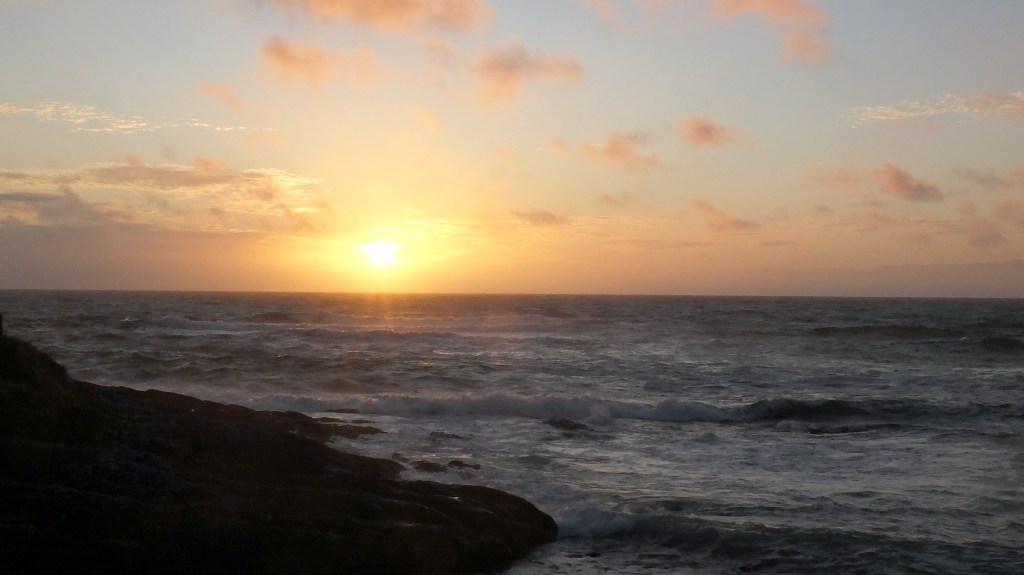
Campsite number one, when we finally reached it, was perched on a narrow shelf of grass on the ocean-side of Barra island. The waves were quite magnificent to behold. I learned on that day that I love the sea from the coast, and only from the coast.
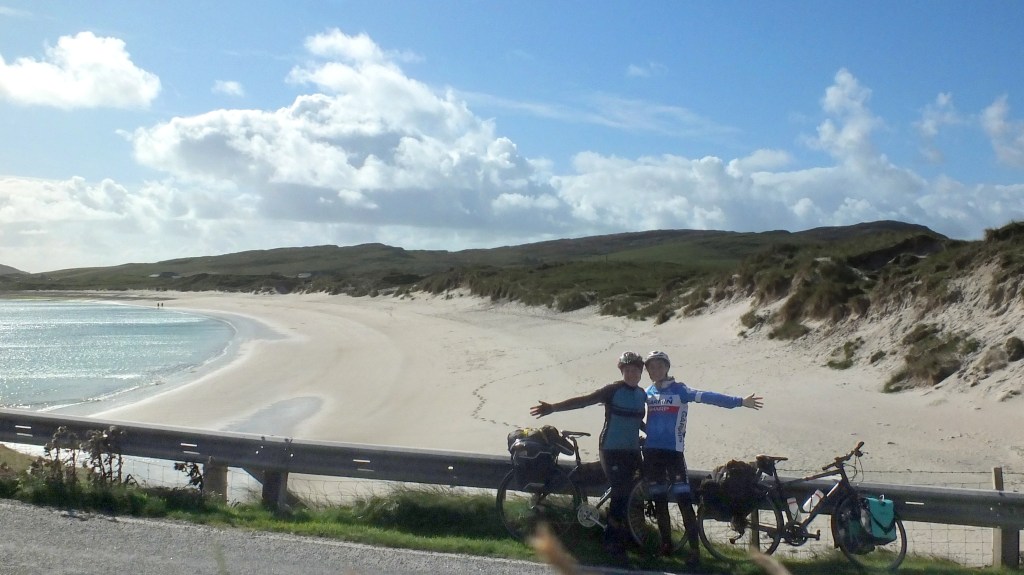
Cycling day number one opened with clear skies, bright blue seas, and a nippy breeze. We wrapped up warm, wrapped up the bags and bikes, left the memory of the ferry behind, and rode back the way we came to reach the white beach of Vatersay island.
And so our cycle journey truly began from our southerly
point on Vatersay beach. With it also began my stream of comparisons with
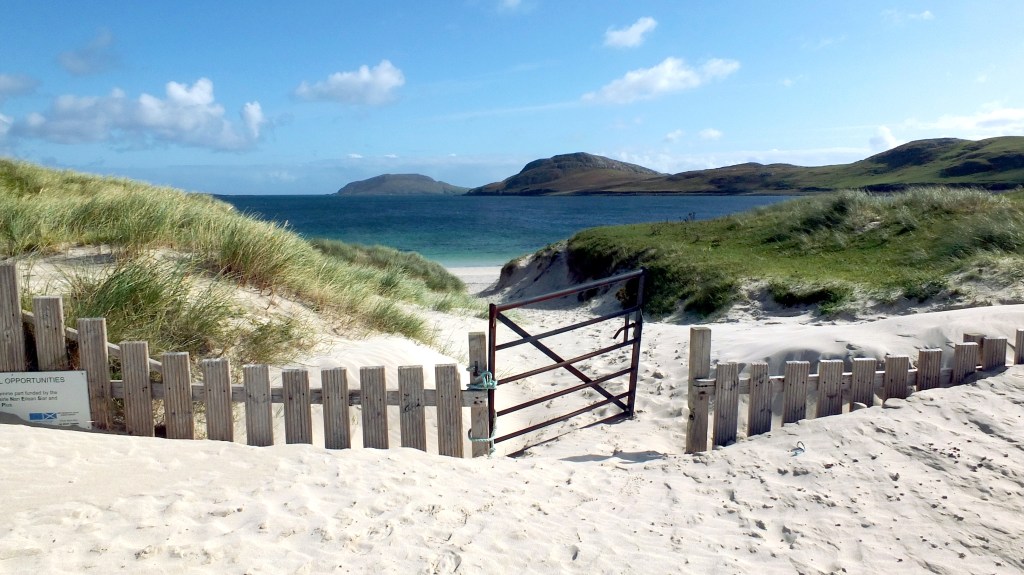
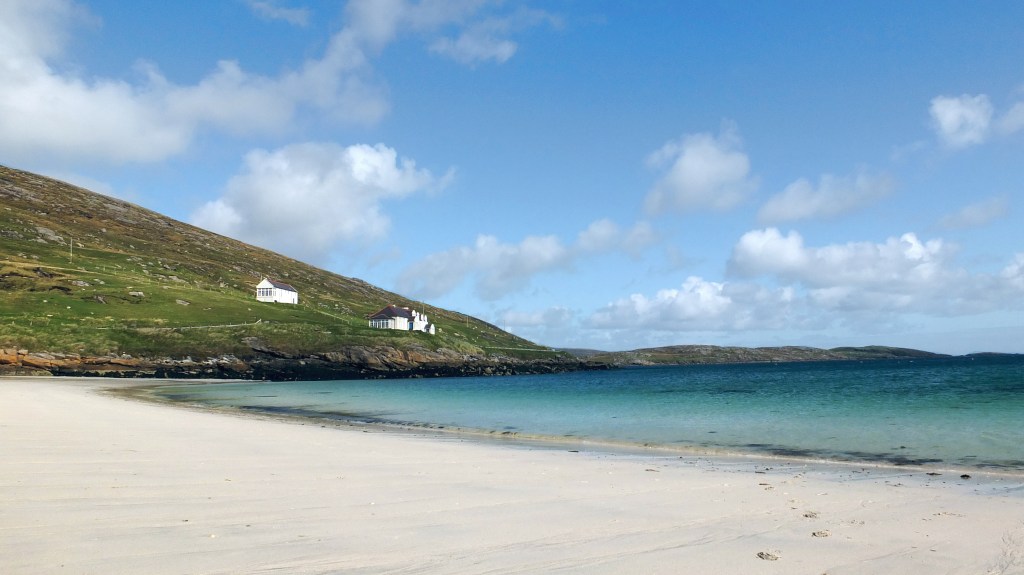
Cornwall. Vatersay beach, with its luminous, smiling white sands and
delightful, gentle sea struck me heavily as being very much like beaches around
the Isles of Scilly. I was sat on a similar beach last September with two other
friends and a crochet project, getting fine white sand brushed into my wool.
And the year before, exploring another beach on the Scillies in the dark with
one of those same friends. Moonlight lit our way and we saw no one but the
stars and were bothered by nothing except the weird sand-shrimp creatures that sprung
up around our food. Both times glow in my mind of the last vestiges of summer
before very long, very difficult, very tiring winters. Last winter was PhD
write-up and I barely saw the bright light of day. Finding Vatersay beach
evoked those memories from the furls of my mind so strongly that they flavoured
the rest of our cycle. We’d see some Rhodedendron plants somewhere along the
Hebrides and I’d shout,
‘Look! Rhodedendrons!! Them’s like in Cornwall!!’
Kate would nod and say, ‘Yes Alice, we also have them in Scotland.’
And then I’d see some brown seaweed left behind by the tide,
and shout,
‘Look!! We have seaweed like that in Cornwall too!!’
Kate would roll her eyes and pat me on the head.
My hysteria was near tangible when we spotted some Rhodedendron and gunnera plants in the same ditch.
‘Looook!!!’ I said, stomping my feet in excitement. ‘It’s just like Cornwall!!’
‘Mm-hm.’
‘And those pine trees!! Those are
all over Cornwall! Don’t they look wonderful silhouetted with the sky behind!’
To which Kate replied, ‘Those are
Scots pines. From Scotland. Mightn’t Cornwall be like Scotland rather than
Scotland like Cornwall, do you think?
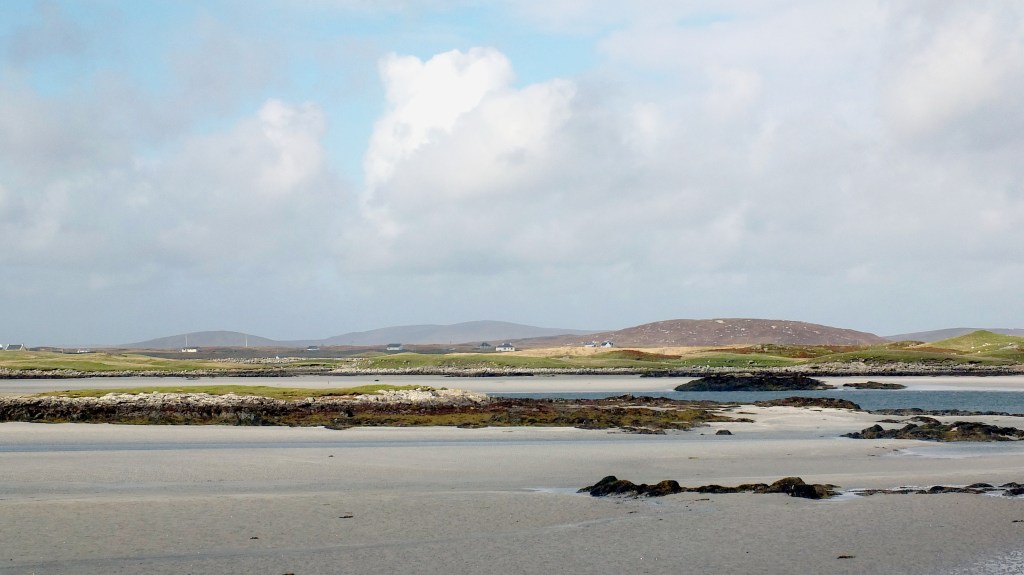
As for the rest of the Hebrides, they are the Scillies but larger, colder, more imposing. More Scottish? Both are a collection of islands further away from the mainland than I thought they would be. Nothing is visible from the horizon beyond the next island except sea breaking through sky. Both were found and occupied, somehow, by ancient peoples who thrived and left magnificent stone monuments of their lives spent there. Both have that small-island feeling of trust and closeness, where everybody knows exactly who the visitors are. Both have the whole world in a teacup, with the end of the island just over there and everything to live by in between. But both are removed from the whole world in ways it is difficult for a mainlander to imagine. World news might as well describe the hypothetical events of the distant future or past. On the Hebrides, Kate and I listened to a radio station narrated entirely in Gaelic and understood not a word. The pace of life is different. The aims and ambitions of life there are different. Finding a shop between all the fields and sheep and isolated homesteads and churches for some milk is difficult. The ways to offend people are different. Sundays are sacrosanct and shall not see laundry hung outside.
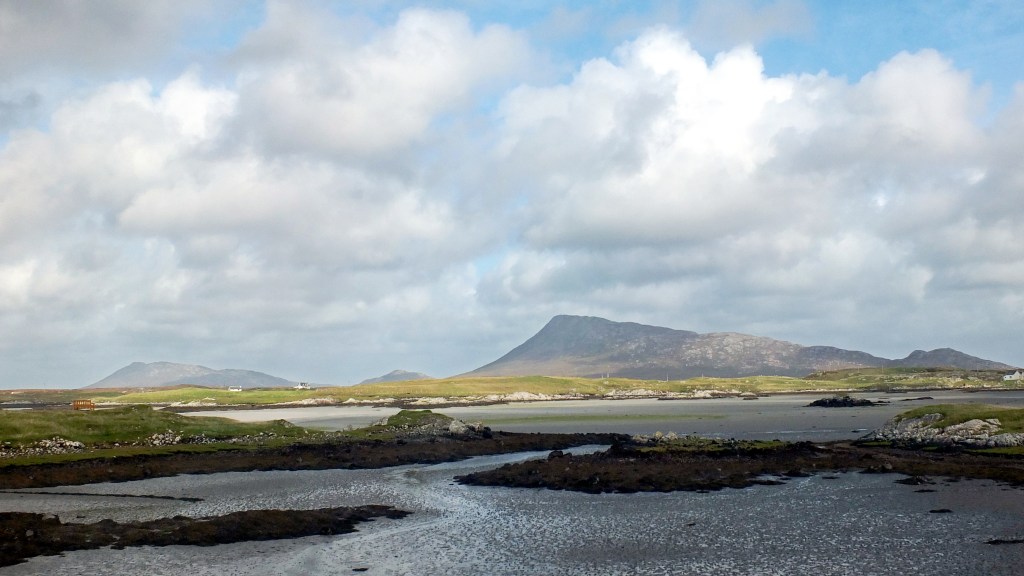
Onwards we cycled, up through Barra and Eriskay, on to South Uist, Benbecula, and North Uist. These islands were some of our favourite because there was a little of everything. A little mountains, and little sea, a little ferry journey, and little road elevation, a little dash of light green smothered by mist, a little museum (with BIG cake), a little headwind, a bigger little tailwind, and a little wave from the vehicles passing by.
A little annoying though, was the insistence from my little
cycling map device that we should turn around now to find the road parallel to our current one and cycle there
instead. So, dear reader, we were on single-track roads for the majority of
this bike ride. A junction would offer the choice of going left or right around
the island, or straight over if we were lucky. The mere thought of their being
a choice of roads to take us in the
same direction would have been amusing if we couldn’t already clearly see
fields stretching out on either side to meet… not another road. But the map
device insisted with many little
bleeps that we were wrong, and still wrong, and still wrong, and why aren’t
we turning around already?!
Before leaving Edinburgh I found a little book on the
Callanish Standing Stones to read as we were going along. In this little book
is a description of the work of Martin Martin:
“Some twenty years later [after 1680], Martin Martin produced the first
plan of the site [Callanish]. It was extremely inaccurate, with far too many
stones in the avenue and only three in each of the other rows. His plan did not
even match his written description, which gave four stones in each of the S, E
and W rows.”
[Gerald Ponting, 2007, Callanish
& other megalithic sites of the Outer Hebrides, p10]
After reading that, the map device was named Martin Martin.
BLEEP! Martin Martin thinks we should have turned left there. BLEEP! Martin Martin thinks we should be at the campsite by now (a good hour or two ahead of our actual schedule, because Martin Martin doesn’t understand ‘bike touring’). BLEEP! Martin Martin just wanted attention. BLEEP says I, when Martin Martin displays the map upside-down or sideways again because we aren’t pointing north.
With Martin Martin (and the back-up paper map) Kate and I did find our way. Some of the most spectacular roads were the causeways built between these islands. Cycling on water did indeed feel real along there! As did the headwind, with absolutely no cover from any direction to shelter us along our way.
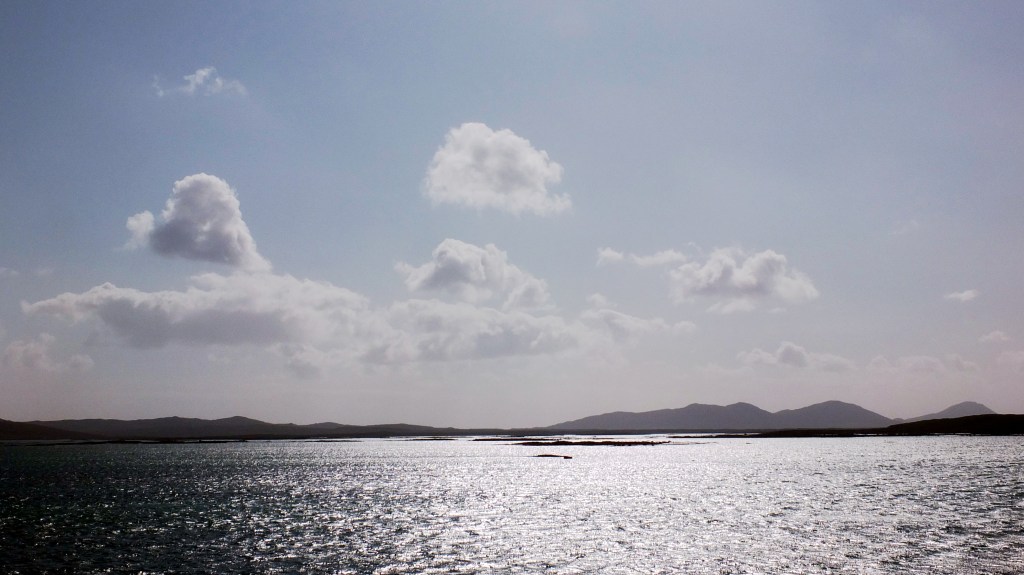
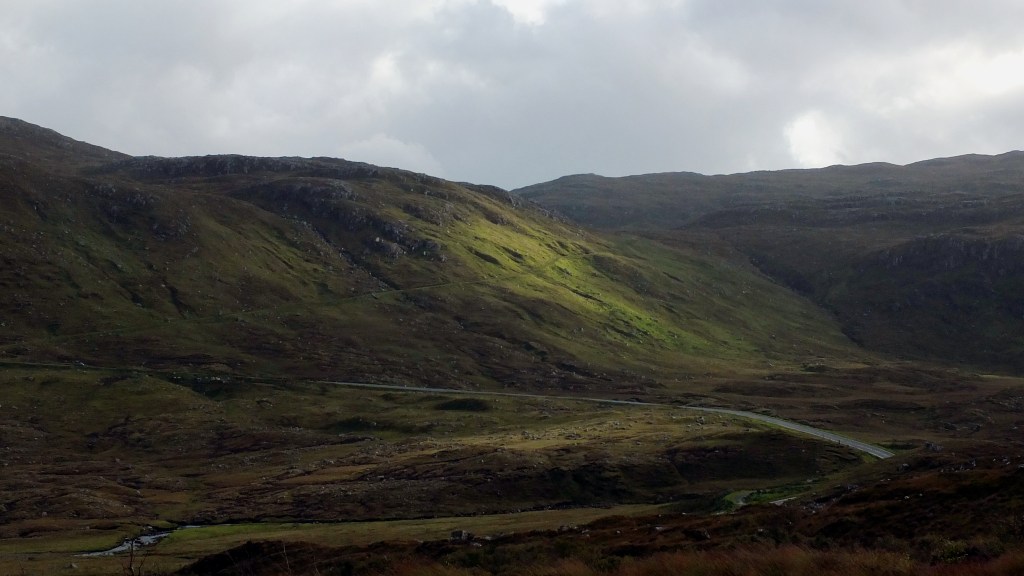
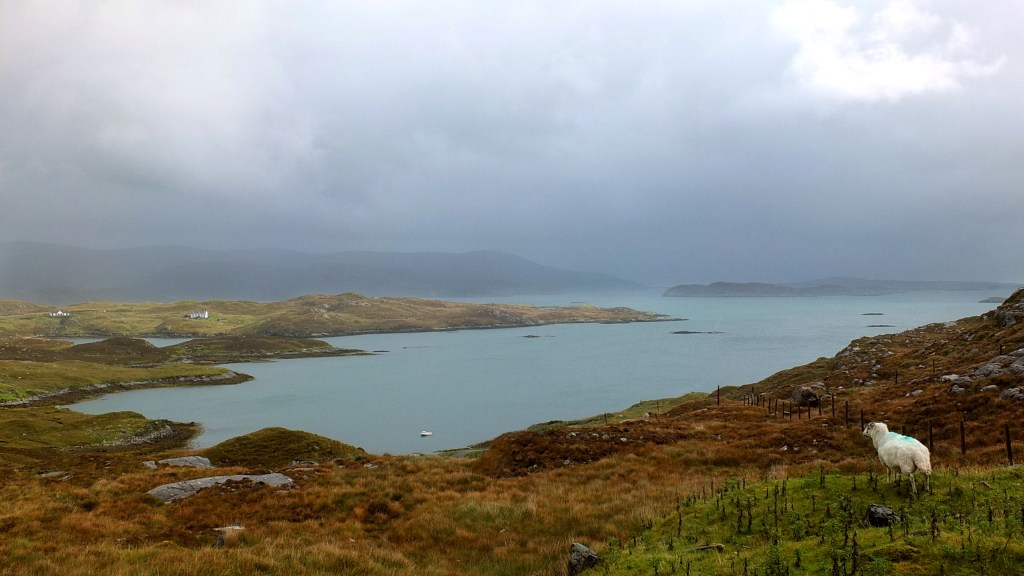
One aspect of the Hebrides was very different to Cornwall: the colour palette. This was all the more apparent when we were crossing between islands and could see the full range of landscape before us. Cornwall is rich gold and deep turquoise and bright blue from the sand and sea and sunshine. Cornwall is outlined by shadowy relief from the sun from around cliffs and stone hedges and Scottish-Cornish pine trees. Cornwall is heavy, dense to breathe in, depressing in missle. The southern isles of the Outer Hebrides are very different. Replace those deep, bright colours with soft green, shades of grey, and fading blue. Daylight softly clouds around any edges to illuminate everything in a pale glow. Sharp breezes pinch at your skin and whisk away your breath before you were quite done with it.
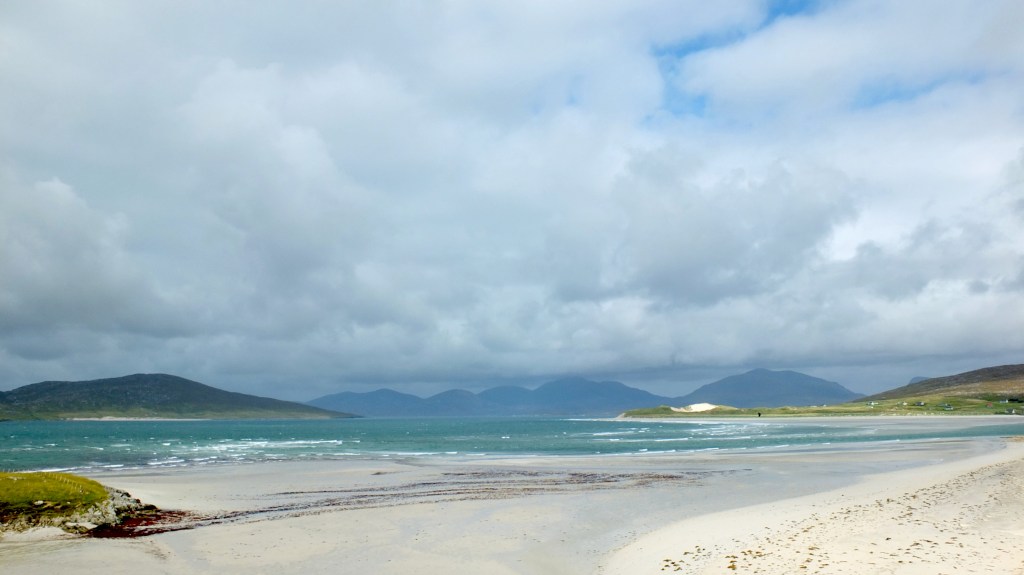
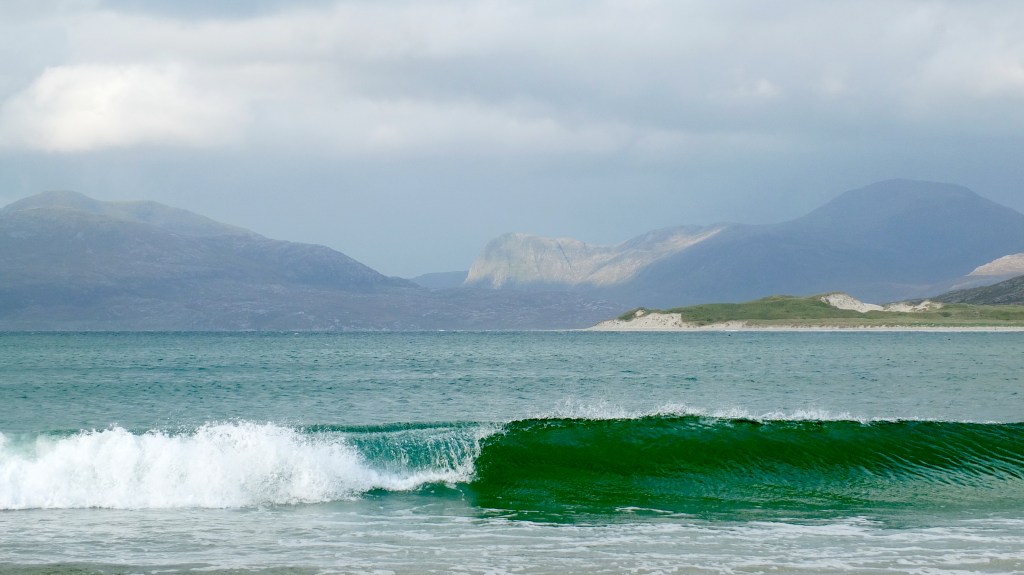
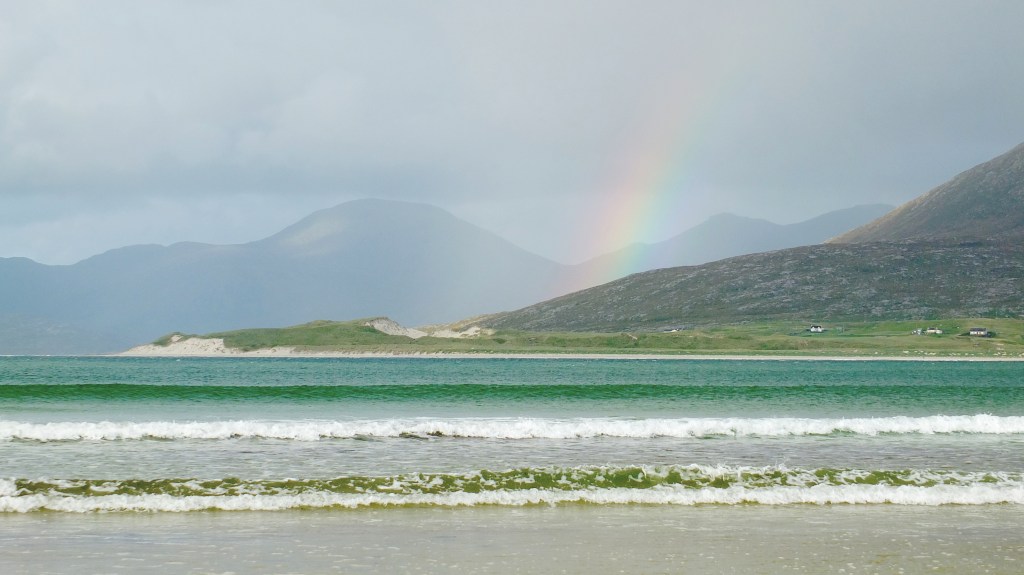
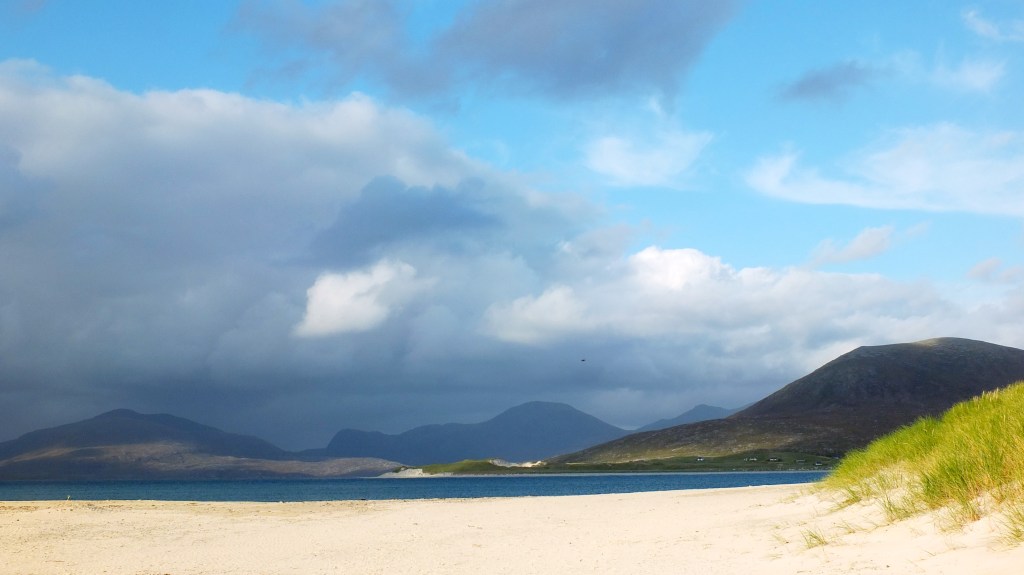
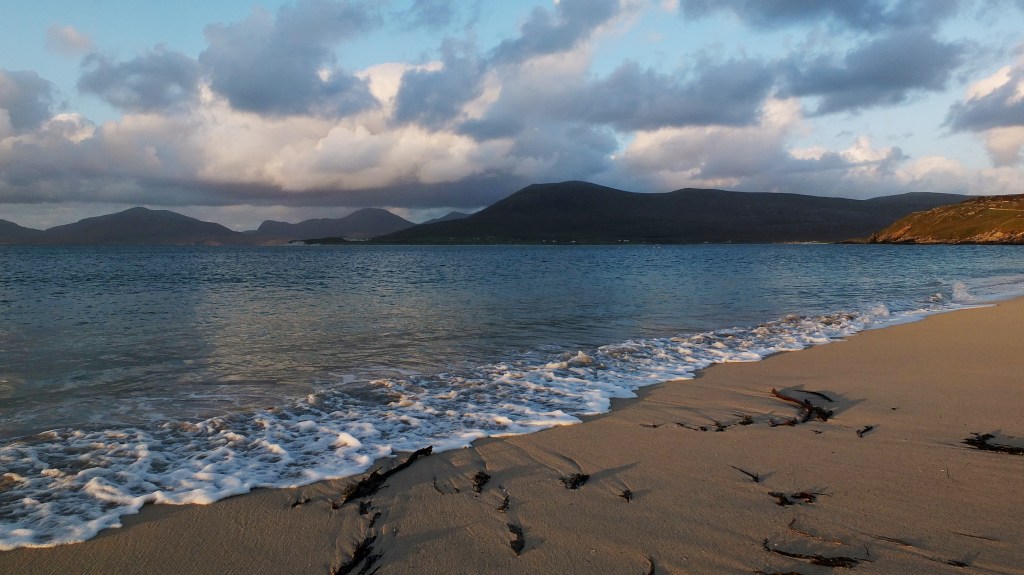
Onwards from North Uist, we reached the Isle of Harris. Our chosen sleeping spot was at Horgabost where we found a beach that filled a hole in my life I did not know was there. In that little corner of the world, a pool of the Atlantic sea stretches itself over a lonely expanse to hug bare, mountainous faces on all sides. Never have I been somewhere that felt so huge, so terrifying, but so close and so friendly in the same bundle of thought. Our view from the beach belied how very distant those mountains were from one another. They could be whispering together, just out of earshot. The silence of the mountains and waves crashing up them is unnerving for a little person sat in the sand a very long way away. Time is visible here. Not the hustle and bustle of a lived lifetime, but the slow, inexorable, thrumming silence of time passing by in the ground sleeping beneath our feet. The time it takes to build mountains and to fill oceans. The time it takes to grind rocks into sand, for waves to travel across the water and for sound to be lost across the sea. The time it takes for suns to set and stars to form. It is humbling to remember that our time now is but a fleeting flicker of a moment. Perhaps for this reason, over all others, I became an archaeologist. Our fleeting flickers of moments can leave traces behind which light up once again under the gaze of an archaeologist, flickering in their own fleeting moment of time. We extinguish quickly, but not entirely.
Chocolate persuaded my melancholic musings to return to the very present feeling of being cold. Flickering moments we may be, but those moments can make themselves felt sharply in fingers and feet stiff with cold in a body sat too long on sand as soft and unforgivingly cold as snow.
Chocolate solved many of our problems on this cycle ride. Too tired? Have some chocolate. Too cold to sleep? Have some chocolate. Too reluctant emerge from the sleeping bag? Have some chocolate. Too hungry? Have some calorie-dense chocolate. Too thirsty? Have some chocolate to make the water taste better. Need tea? Have a hot chocolate. Our bags were substantially lighter by the end of the ride.
Our journey beyond Harris took us to the plains of Lewis where any sign of an endless sea was swamped by endless peatland. Brown, sludgy, damp, squishy peatland. Peatland breaks up the sky on Lewis, not the sea. Low-hung clouds break up the peatland. And two little cyclists broke up the cloud, getting very soggy for our efforts.
Rather happily though, ancient peoples left some standing stone monuments to break up the horizon as well.
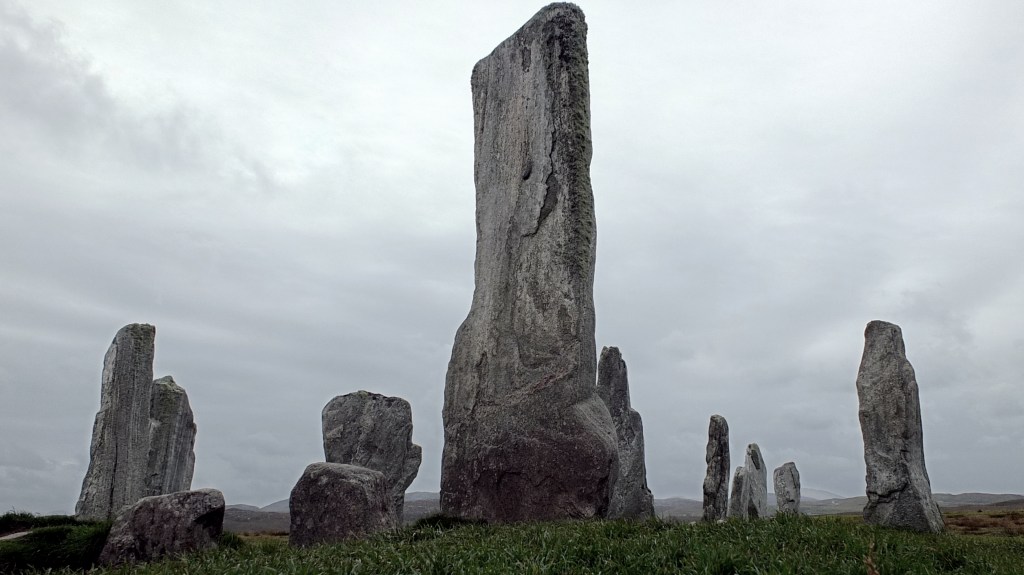
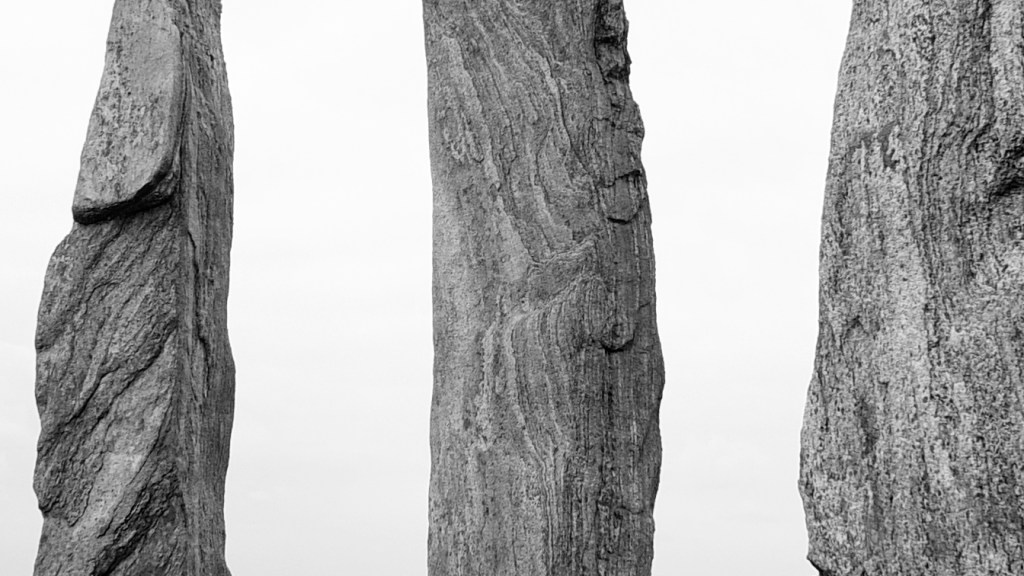
After reading about Martin Martin and the faulty description of the Callanish Standing Stones, I was very keen to see them for myself. The little book told me that these stones were once people who were frozen in alignment for misdemeanours deep in a mythological past. Some of the stones did indeed seem to stand with hunched shoulders reminiscent of grumpy huddled people. The archaeological-eye-view of these stones can rather sniffily point out the oldest stones were probably placed there around five thousand years ago after having been hefted from local Lewisian gneiss stone. What the archaeological-eye-view will also tell you though is that these stones did not begin as they look now. The stones stood alone for several centuries before a burial chamber was built, then emptied, then restored, before the entire site was left to a rising tide of peat after around two thousand years, for around two and a half thousand years. Only in the 1800s was the one and a half meters of accumulated peat removed to expose the full depth of the site buried underneath. Take a moment there to mull on those time scales. People three thousand years ago would have looked at those stones, already a thousand years old, and decided to embed themselves in it still. That would be like finding people three thousand years in the future still using the remaining ruins of one of our buildings, only to be found in another few thousand years by different people who, knowing nothing of us, weave their own myths and legends around the stones left behind. These are material remains that connect us strangers cascading through generations of thought. The people who first hefted those stones from the ground and dropped them standing upright created ripples of time that we visitors to the site are still rocking by. Now isn’t that a mighty flicker of a moment to behold!
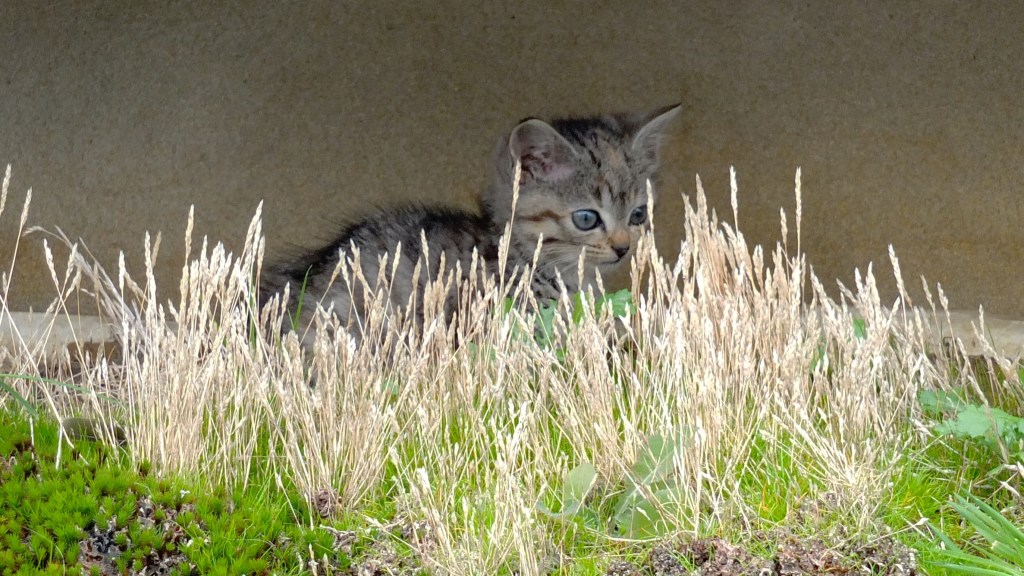
While walking back from the stones, my thoughts and feets still wandering ancient lands, a persistent mewling reached my ears from somewhere up. Of all the most adorable things, a kitten was up in the rafters of the museum! Its tabby fur would have been perfectly hidden among the grass growing up there if it weren’t for its big, marble blue eyes and tiny hungry call. I, and everyone else, were hopelessly enamoured. All intellectual curiosity of the site was forgotten. Profound as archaeology is, the stones don’t cutely mewl.
Cats further thwarted our attempts at efficient, serious, grown-up cycle touring the next day. A campsite cat found our laps to be a far superior spot to sit than the soggy ground. How could we resist the honour when the alternative meant packing up the tent and cycling into damp, damp cloud? The look of dejection bestowed on us as we eventually left was quite piercing. So began our last proper day of cycling up the Hebrides. Our original plan was to head all the way up to the top of the island, just beyond the Port of Ness. The weather was so very dreary that we decided the tick-box exercise was not worth the sapping enjoyment of cycling an extra twenty miles in the rain. We instead headed straight for Stornoway where our ferry back to the mainland was leaving the next day.
Stornoway was a shock after the isolation of the previous islands. Traffic hurtled past us and queued up in front of us. There were roundabouts and potholes and pedestrians. It felt horribly like being clobbered by a migraine of urbanism after such a dreamy journey in the wilderness. But Stornoway also held within it the best-tasting cup of tea I think I have ever had the pleasure to clutch between my hands. Sea buckthorn cream Rooibos tea. The smell of it is earthy and fresh, soothing and enlightening, nourishing to heart and soul. Like oats. Oats fuel most of my thought and movement. A day without oats has not yet been a day. And in a little tea shop in Stornoway, I finally found the oats of the tea world. A tiny bag now resides in my kitchen cupboard, wafting heady tea odours into my face every time I peer inside.
We now reach the end of the tales and travails of the Outer Hebrides. I could end with an almighty rant about transporting bicycles by train, about being forced to haul our loaded bikes up and over a footbridge at the last moment because of misleading platform signs, about slotting and balancing our bikes together in tiny designated cycle areas on carriages, about the impossibility of travelling with a bike and panniers in already over-crowded trains. These things did end our journey, but will absolutely not end this post.
I shall end instead with a promise to adventure by cycle again soon. The freedom of living with your life on your bike, and a friend by your side, is truly wonderful. We travelled by the fuel of chocolate across the islands of the Outer Hebrides, beholden to no one but ourselves, saw sights unseen by us before, drank in the views and breathed in the colours. More tales will follow. Perhaps on the other side of winter.
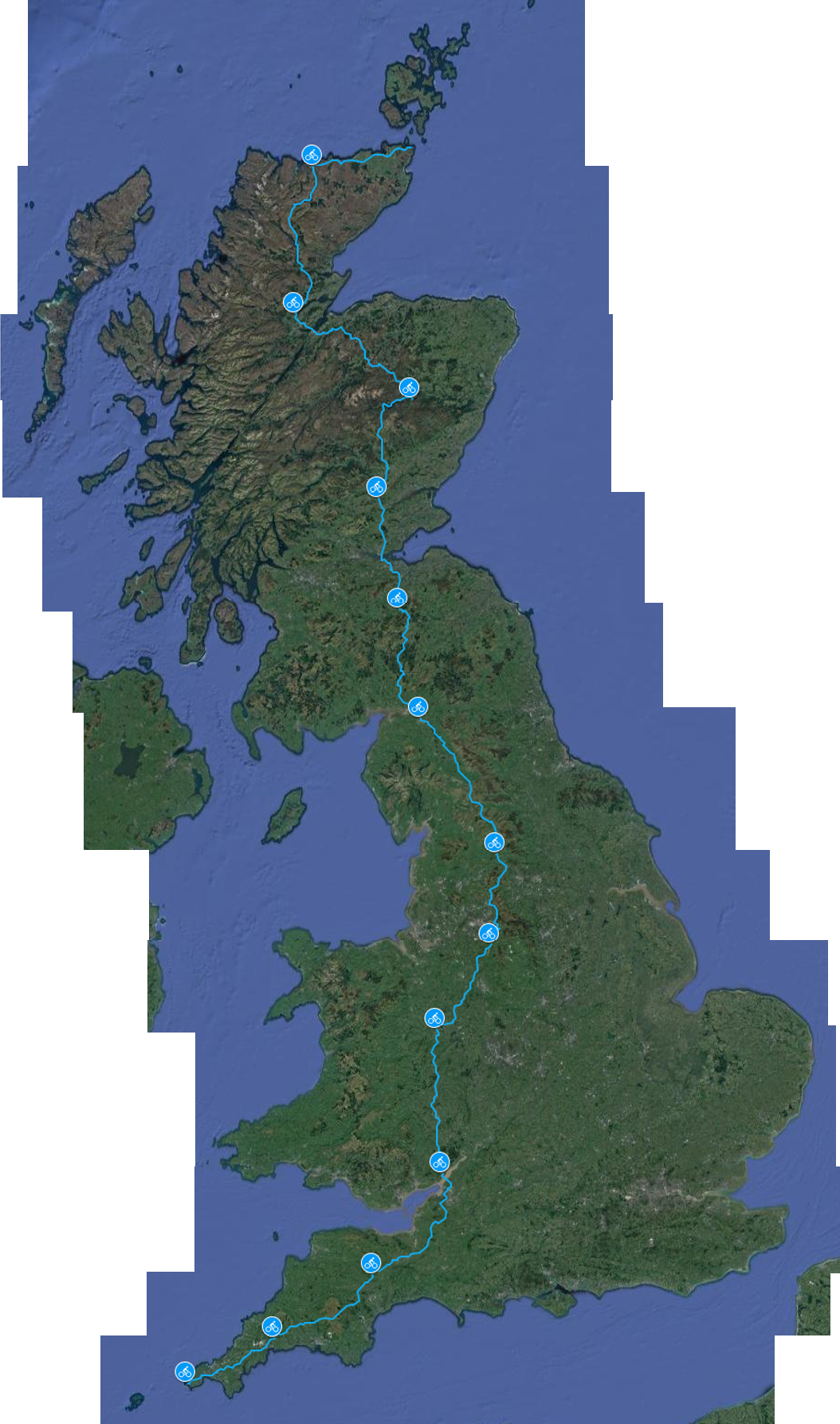
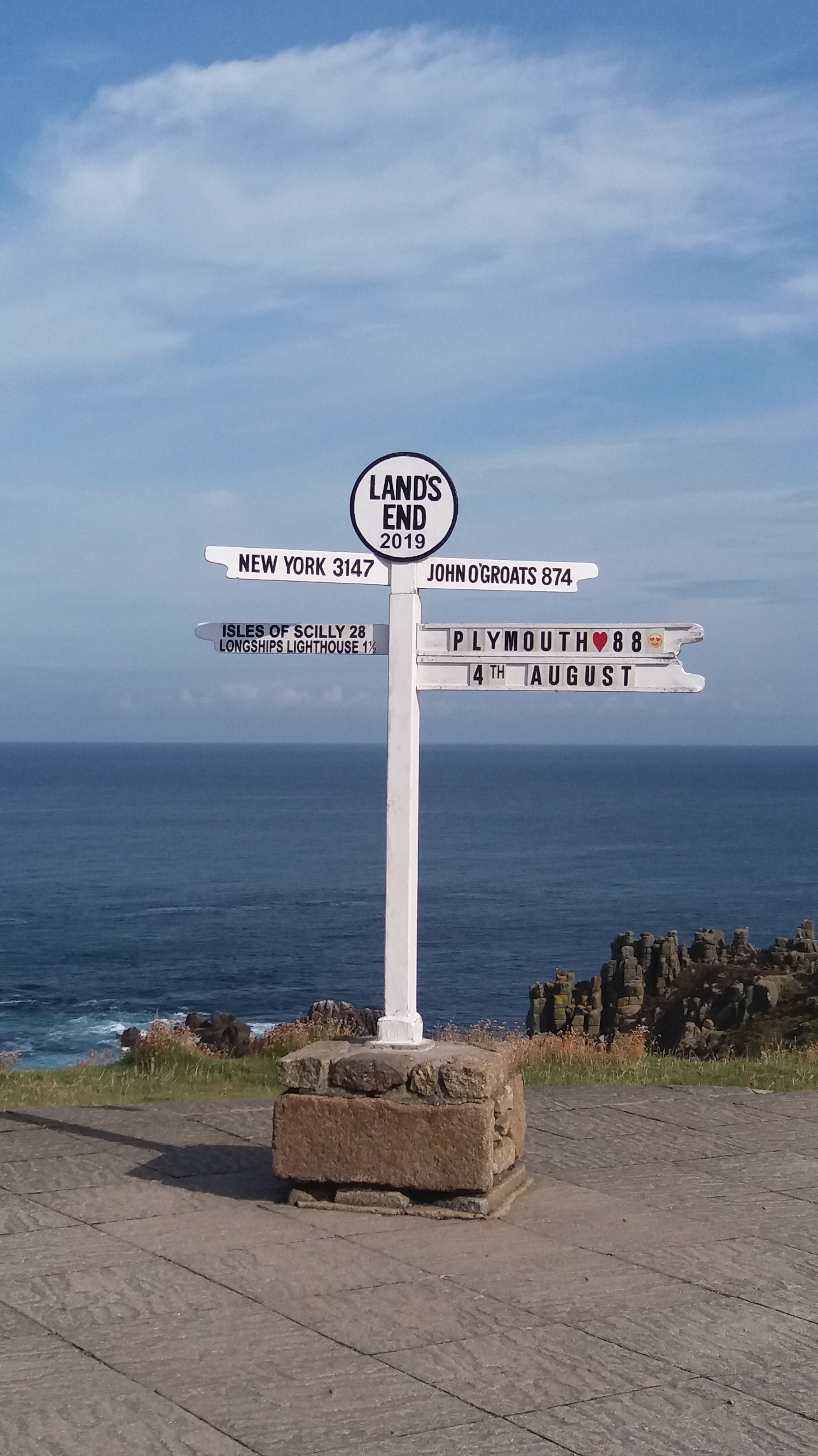
The whole route we cycled, from Land’s End to John O’Groats.
That’s 13 days on the road, from one end to the other. It looks like a really long way on that map. It all seems a bit like a blurry dream now though… The countryside certainly morphed a lot on the way, as did the accents and architecture. I spent enough time in the sun to develop ridiculous cycling tan lines that are going to take a very long time to fade. My hands still feel swollen and numb from relentless handlebar gripping. I also spent long enough with the others in the group to assign them Hogwarts houses (not that they know it). And yet.. it still only took a few days of cycling to reach Scotland, and a few days more to reach the top of the island.
For a relative time scale, it would take me around 11 to 14 hours (call it one day) to travel from Falmouth to Edinburgh by train. That same journey on the route we took would take me seven to eight days by bike. We may conclude from this that cycling is only a week slower than train travel 😉 Or, that with some working wheels and a lovely bunch of encouragement, even a week of cycling doesn’t feel that long 🙂 Or, that I’m already forgetting the miserable parts with rose-tinted hindsight…
Not all of it was fun. I think perhaps my previous posts might give some hint of that. There were some racing highs and swooping lows, some in very rapid succession, many had nothing to do with hills (which I’m sure made me very tedious to be around – sorry Dad!).
A deceptively brilliant day at the end of 50 miles of headwind.
I have learned that the sleeps and the eats are excellent friends to maintain, and that a kind word from someone else can give a powerful push when the sleeps and the eats aren’t enough. I will also never, ever dismiss the wonder of ibuprofen and paracetamol ever again.
I have learned that the brain will happily fling forth the most random songs at the slightest provocation to dance round my head for the next however-many miles. Great if it is a good song. Not so great if it isn’t.
I have learned that 90 miles is a Very Long Way to cycle in a day (for me), but that I can do it if I have to. And repeat the distance again tomorrow, if I have to. I’ve also learned that I would prefer to linger in places a little longer, to see more, read more, dwardle more.
But most of all, I’ve learned that people are great. Re-learned, I should say (I do like people, really). I was more than a little apprehensive about spending the next fortnight with a group of strangers (except for my Dad), especially after months of PhD-enforced writing-up solitude. Socialising is a skill that requires practice, but socialising did not feature in my training program at all. There were definitely days when I would rather have cycled up another hill than face company over dinner. But a bit of time and hardship shared over endless hills in dratted weather brought out some of the best in everyone. Thank you Trailblazers for keeping me sane at the back. And especially thank you Dad, for the kind words of encouragement when I eventually reached the end of the day’s ride, a couple of hours after you.
Ride tally
Distance cycled: 976 miles
Height climbed: something over 20,200 meters (yes I know I’m using different measuring systems – all the road signs are in miles and mountains are in meters, so I’m sticking with it)
Calories burned: at least 40,000
Days cycled: 13
Days I put on damp socks: 11
Time on the bike: nearly 100 hours
Time on the telly: 7 seconds
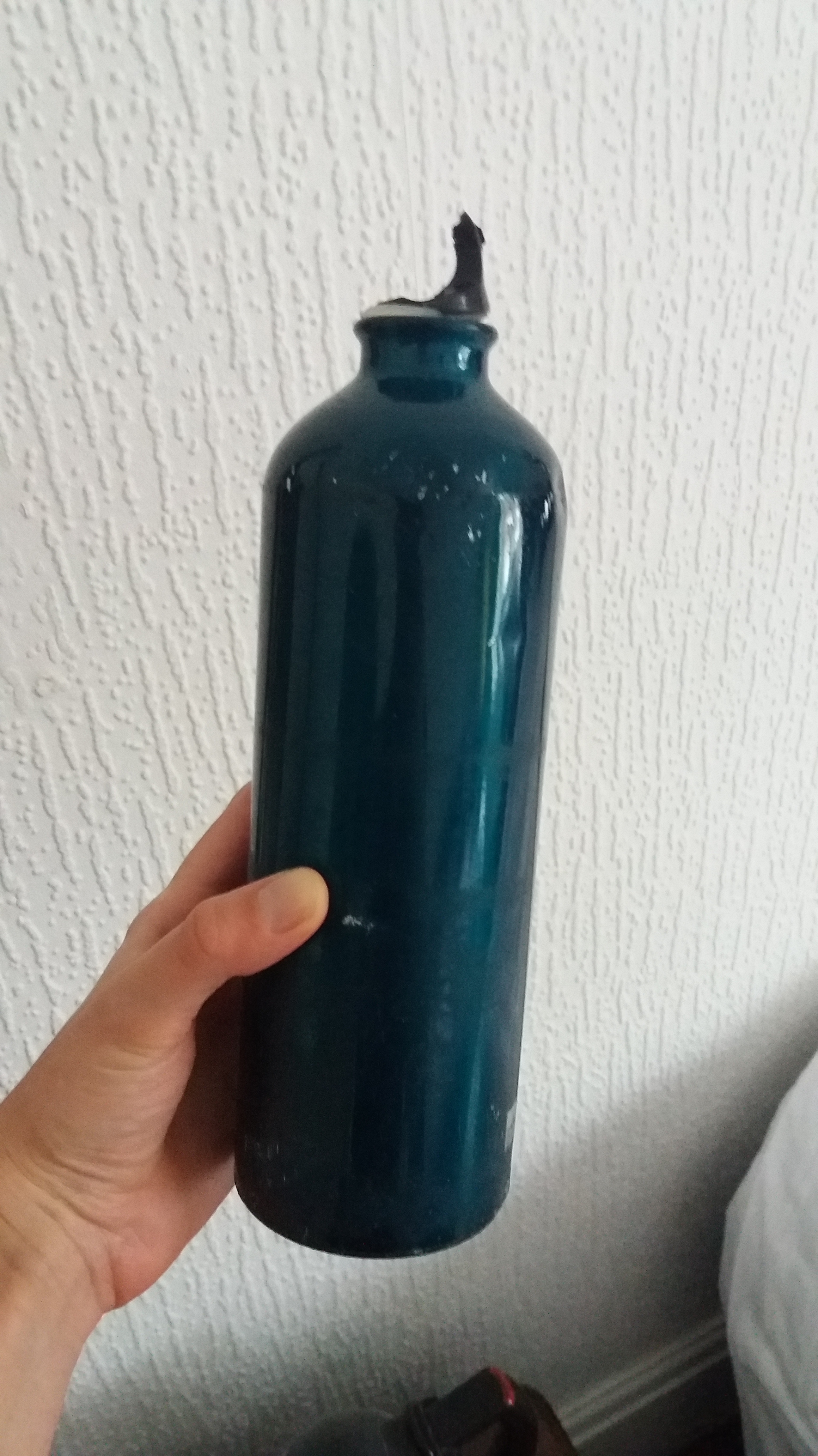
Bottles broken: 1
Floods cycled through: 4
Punctures: a miraculous 0
Times that I got off and walked: also a miraculous 0
Number of times I cried on the road: 1
Number of times I wanted to cry on the road: >1
Number of times I laughed on the road: more than the number of times I wanted to cry *
*I think that last point is the most important one 🙂
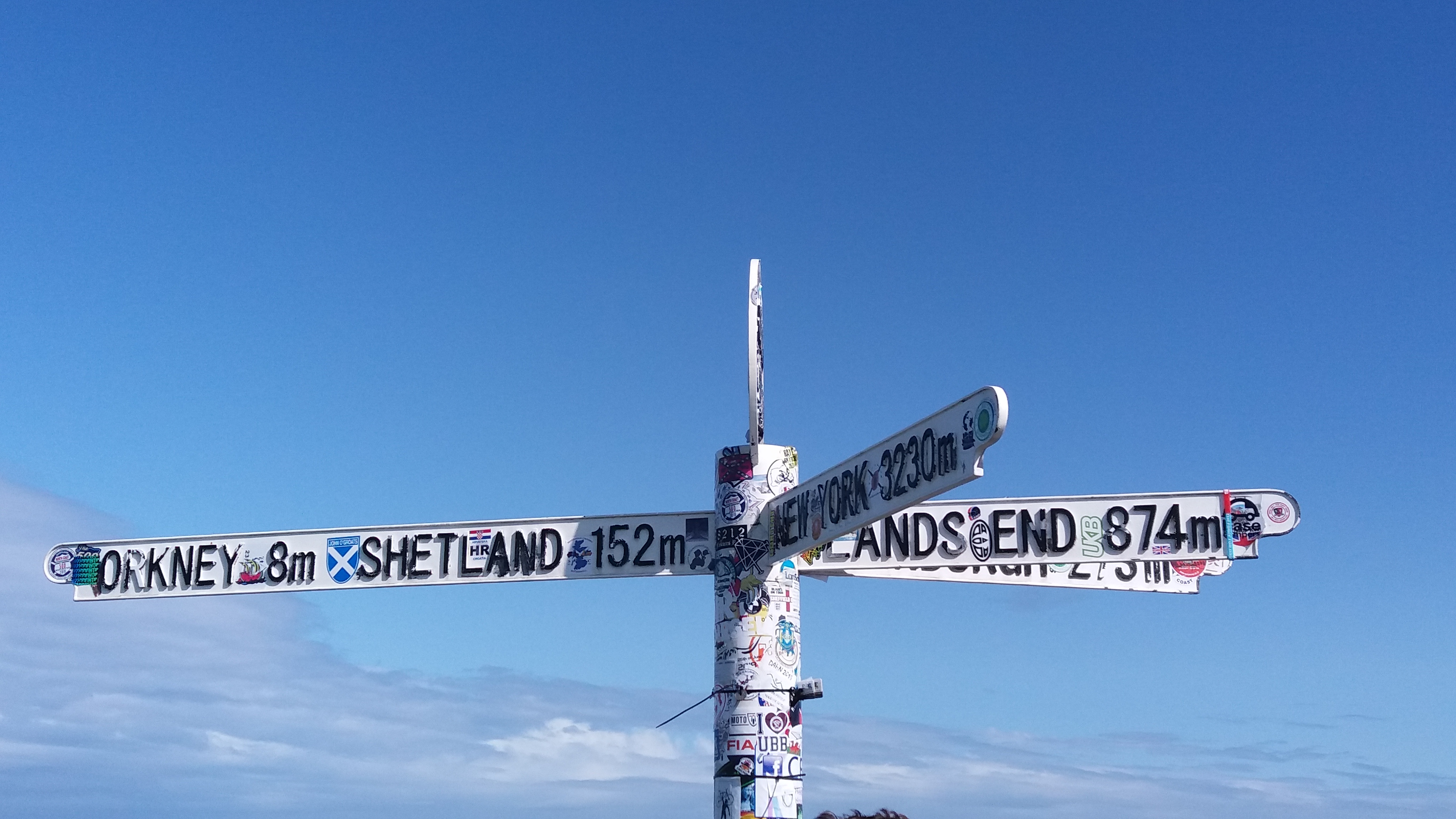
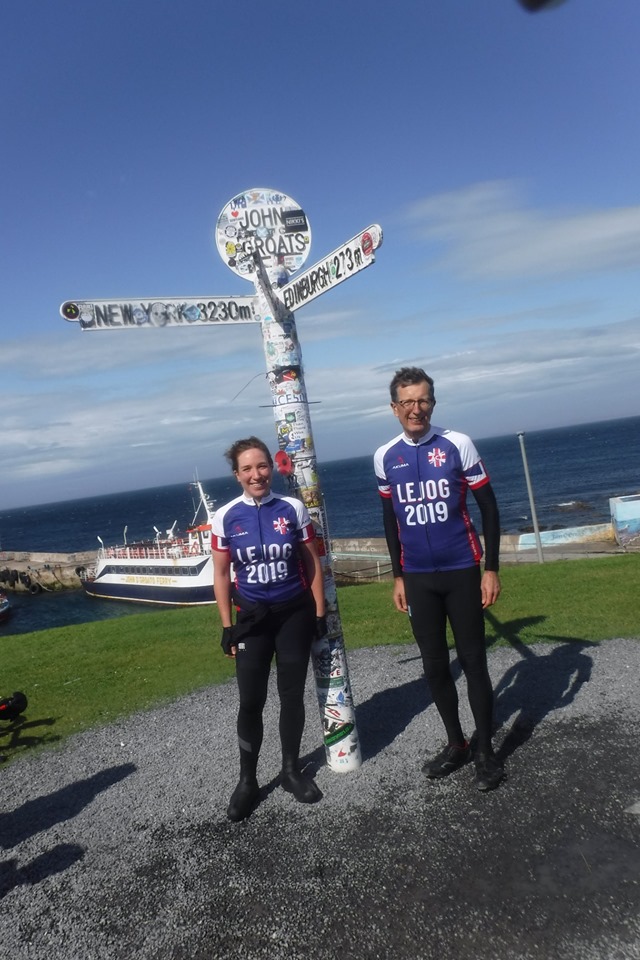
Dad and I, being buffeted by wind at the end post.
There are all different flavours of incentives to get something done. On a long ride like this, there absolutely is the incentive to get to the end and say that you’ve done it, but I find that particular thought too big and distant to get me though a tough day. Instead, I tend to call on the great power of Little Incentives. Just get to the next stop… just get round that corner… just get past that tree… then the next…
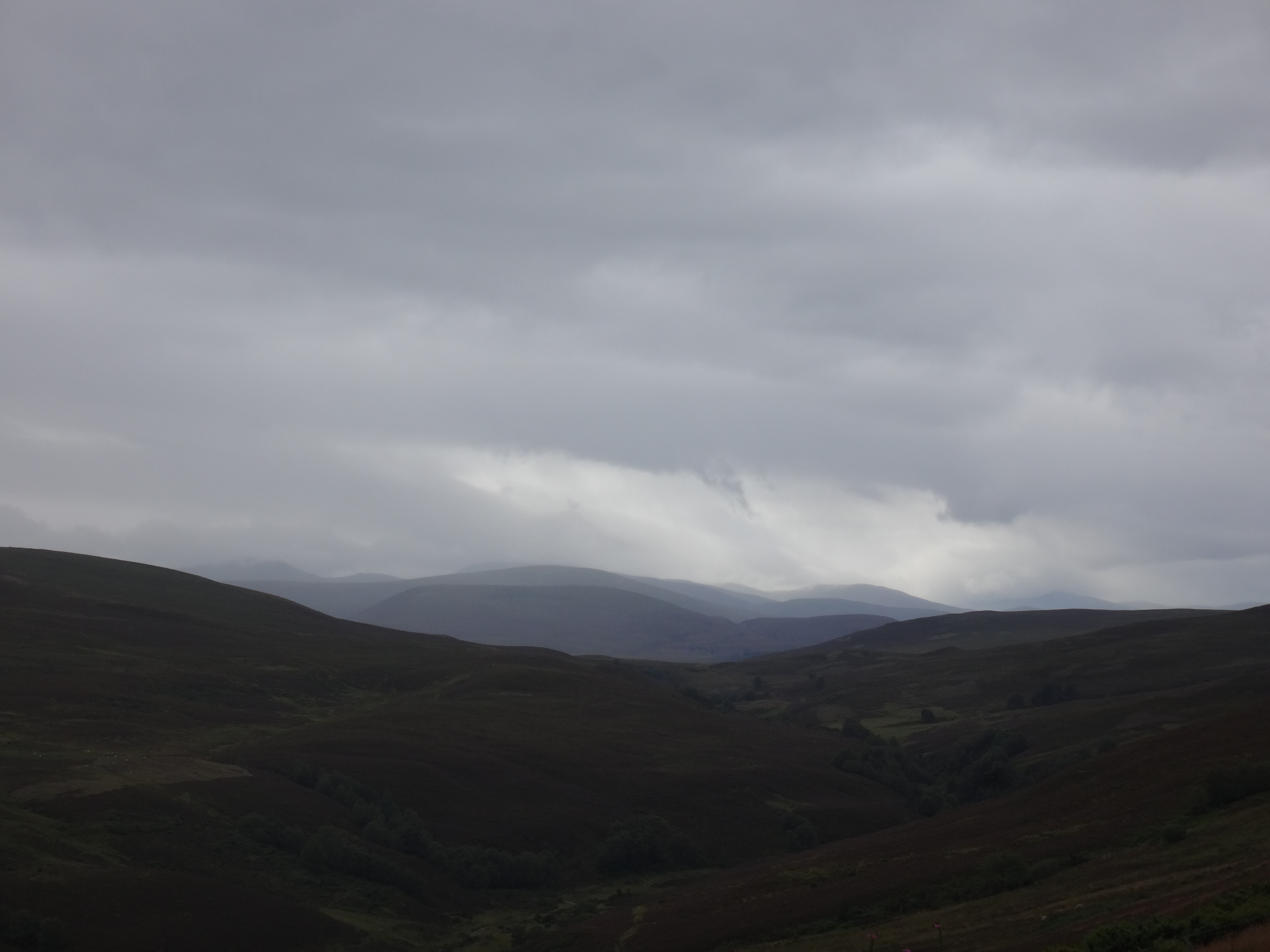
Some gods rolling around in blankets. Or mountains of the Cairngorms, depending on your perspective.
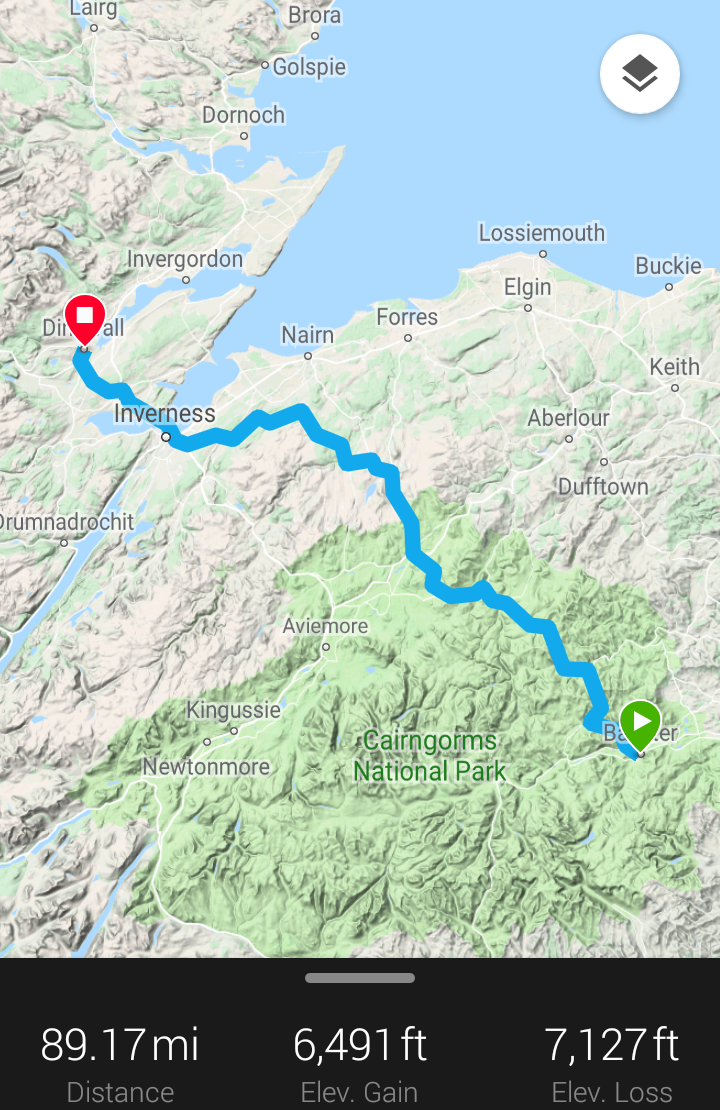
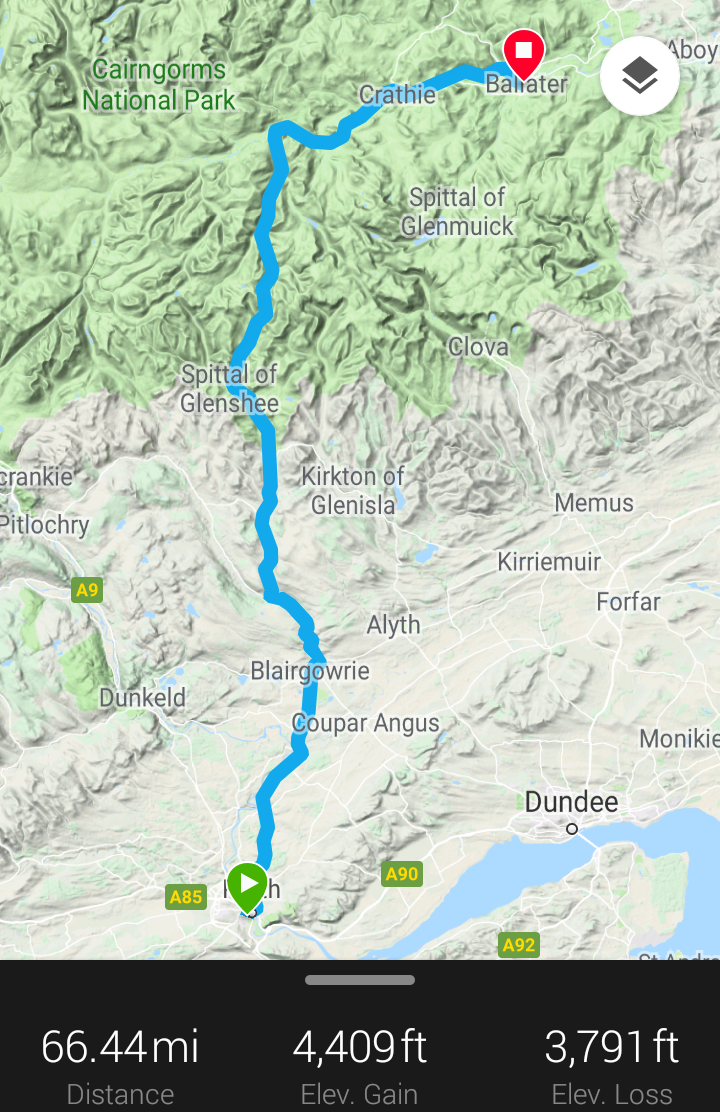
The last two long, long days have needed and had all sorts of different incentives. On the journey from Ballater we journeyed through the mountains of the Cairngorms in weather clear enough to show them in all their magnificence. But to see these mountains does also require climbing some mountains. And climb we did, up roads that were as steep as walls, winding higher and higher… Here, each pedal push was an incentive and required enough concentration to keep upright with both wheels stuck to the road that the corners soon inched by. We all glowed with euphoria when we reached the top of the greatest climb of the whole journey (the Lecht).
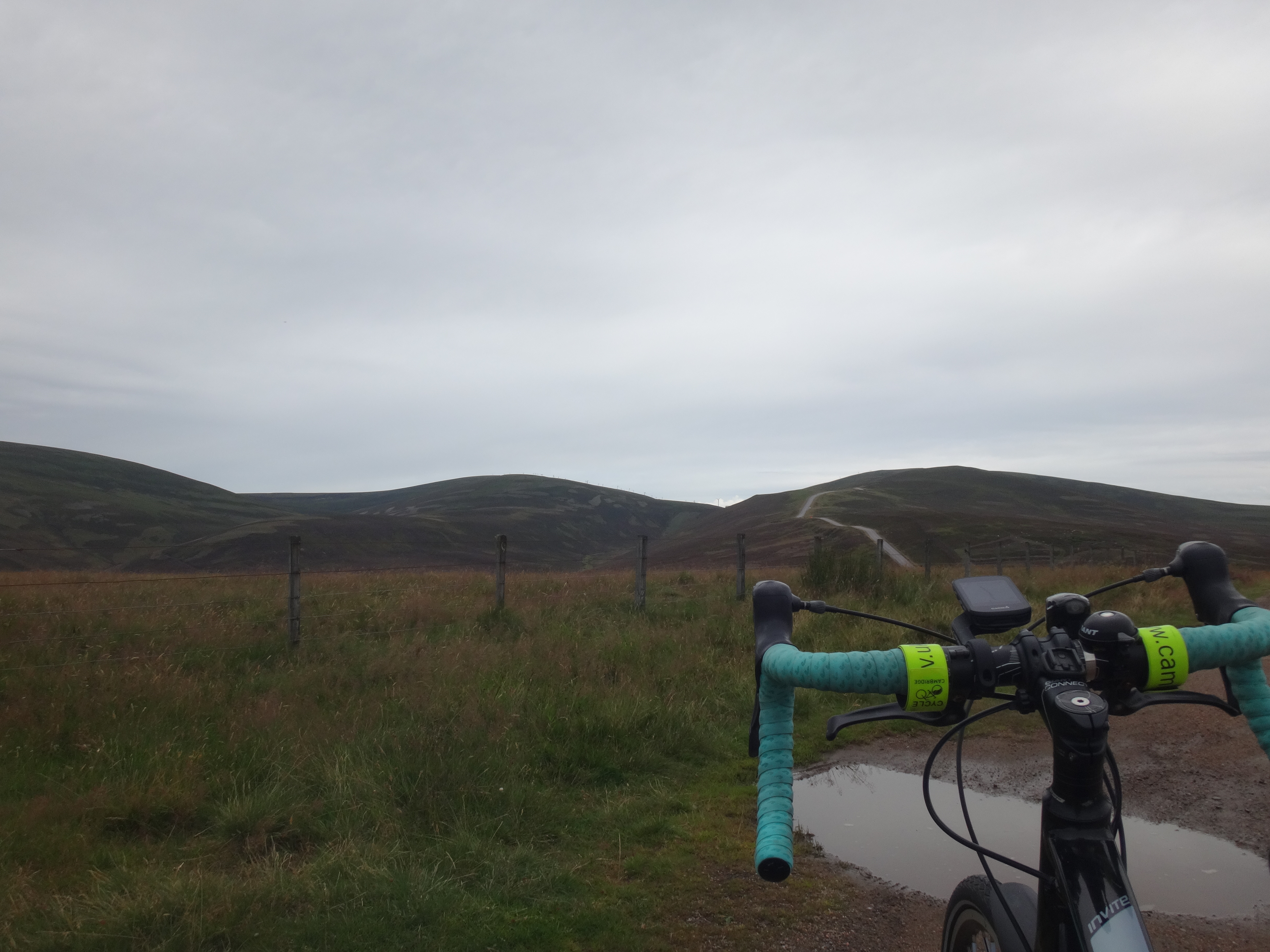
Bike contemplating the next section of mountain ahead, after surviving some fearsome steepness that rivals even some of the hills in Cornwall.
But there was still a long way to go after the towering highs of the mountains . On this particular day I had an extra special incentive that had nothing to do with cycling achievements or beautiful views. I knew my brother was going to be somewhere up ahead. So on I cycled. On and on.
And lo! Over in the distance was a rather tall, non-lycra clad figure with his partner, filming me speed up to the food stop! I didn’t even get off my bike for a hug.
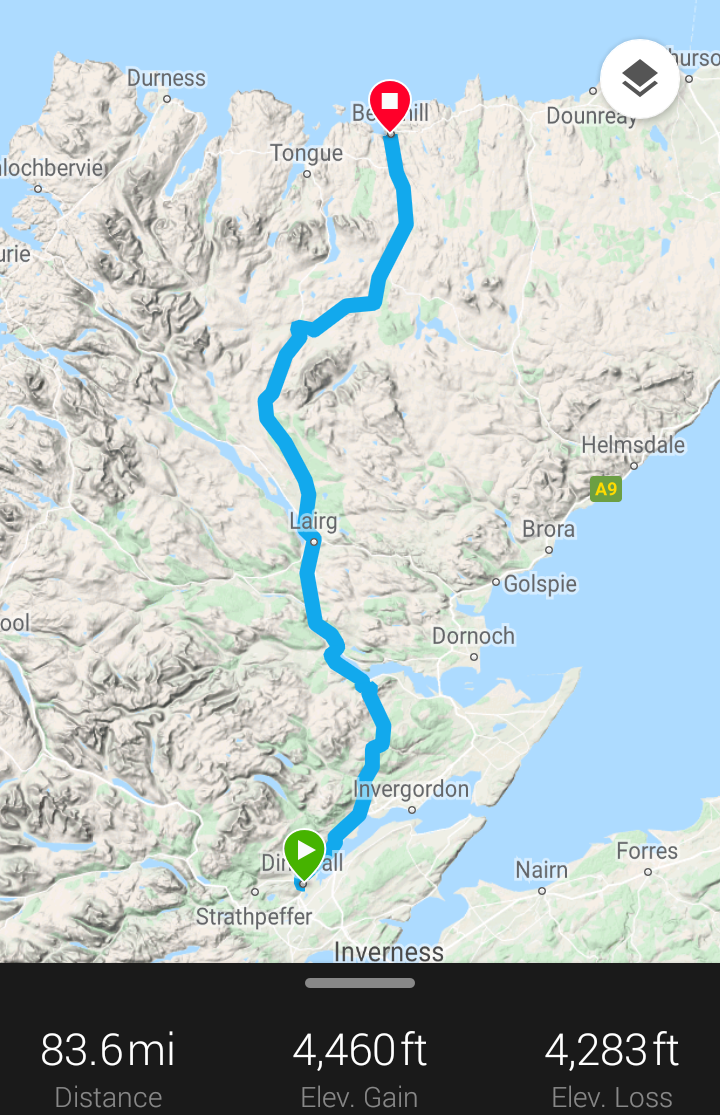
The incentive of the final part of the day was to get to Dingwall, where Stuart and Tara would be waiting, as quickly as possible for another cuddle. I rattled along at top speed!
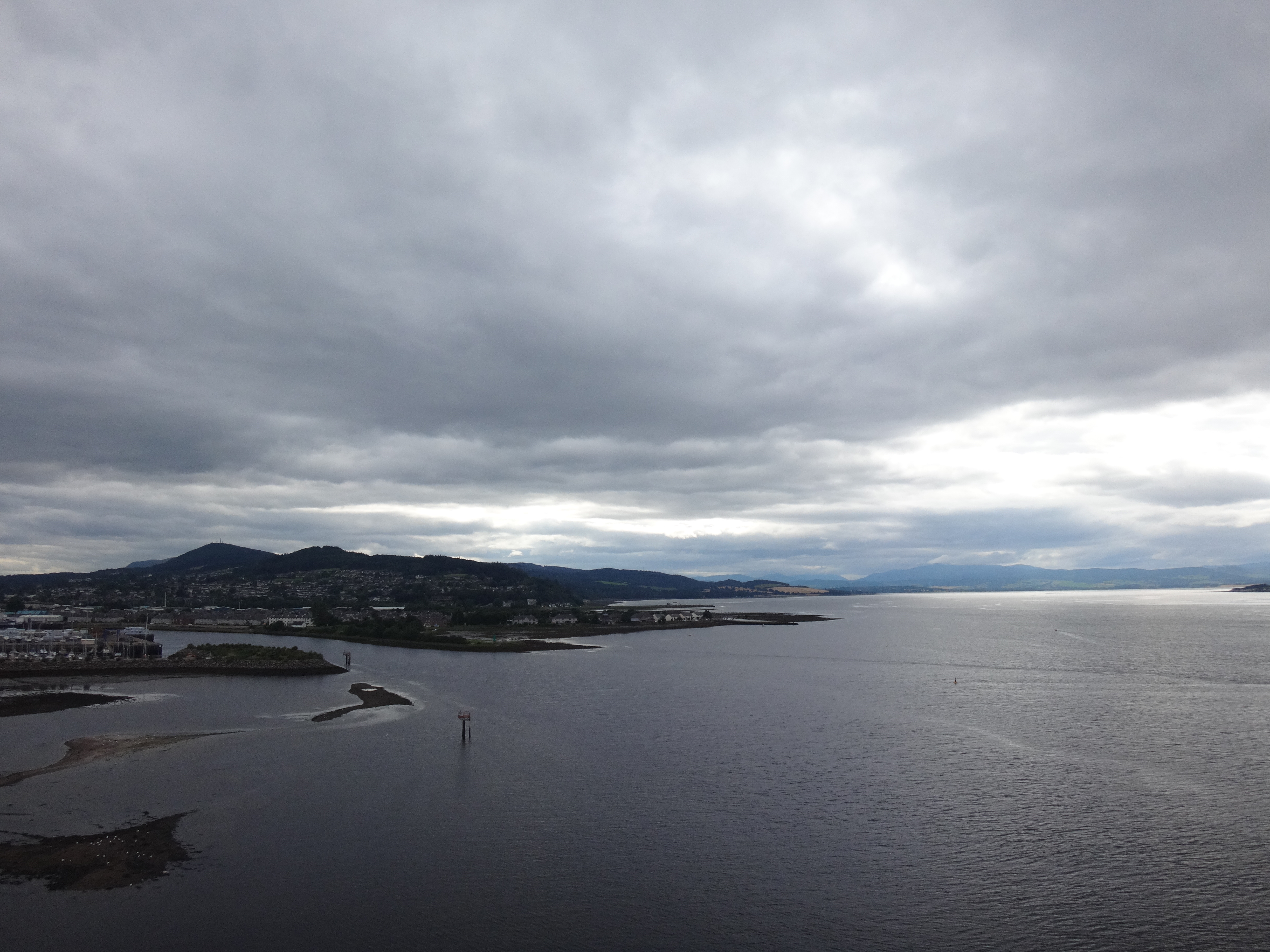
A corner of Inverness with Ben Nevis in the background.
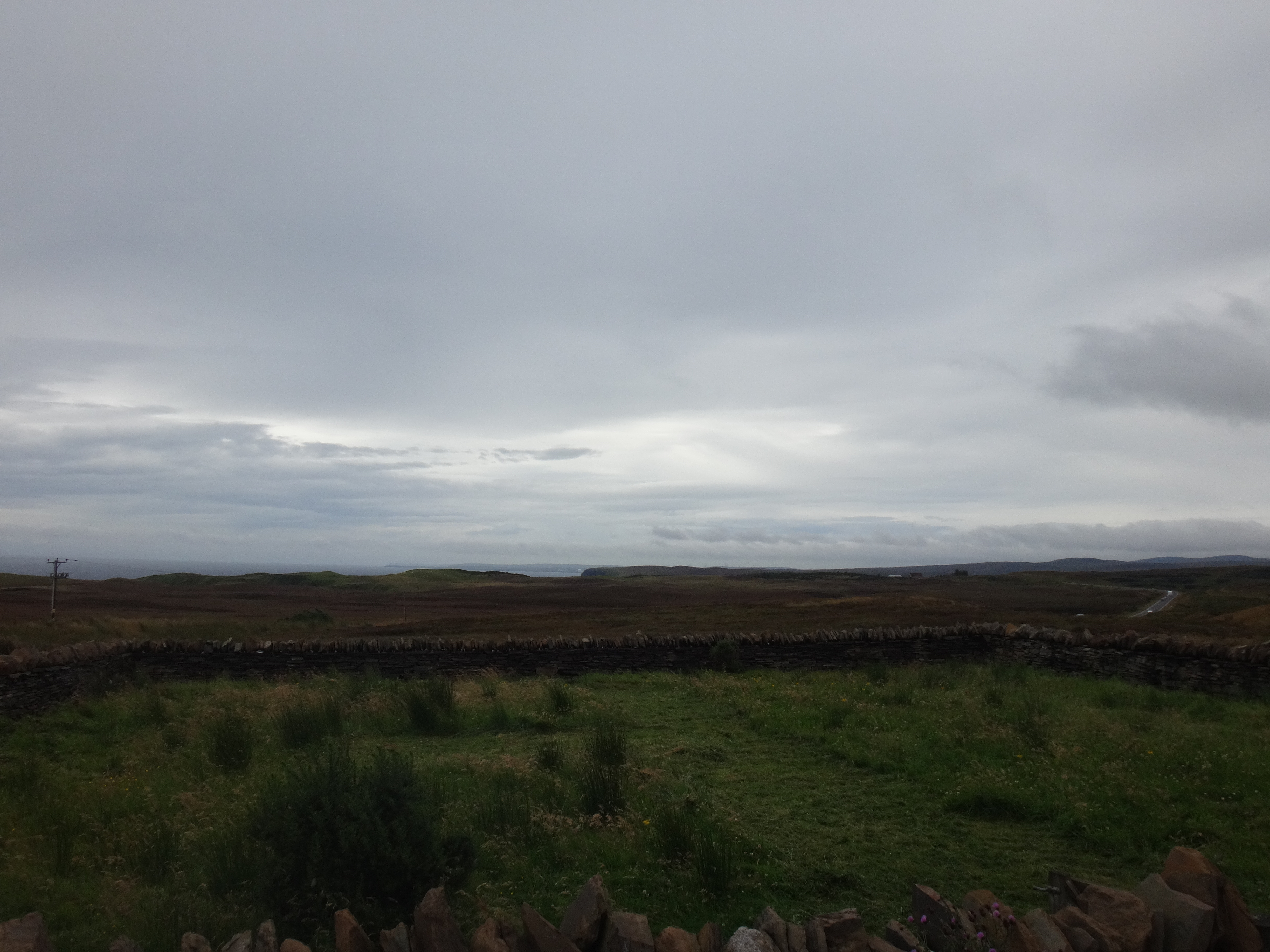
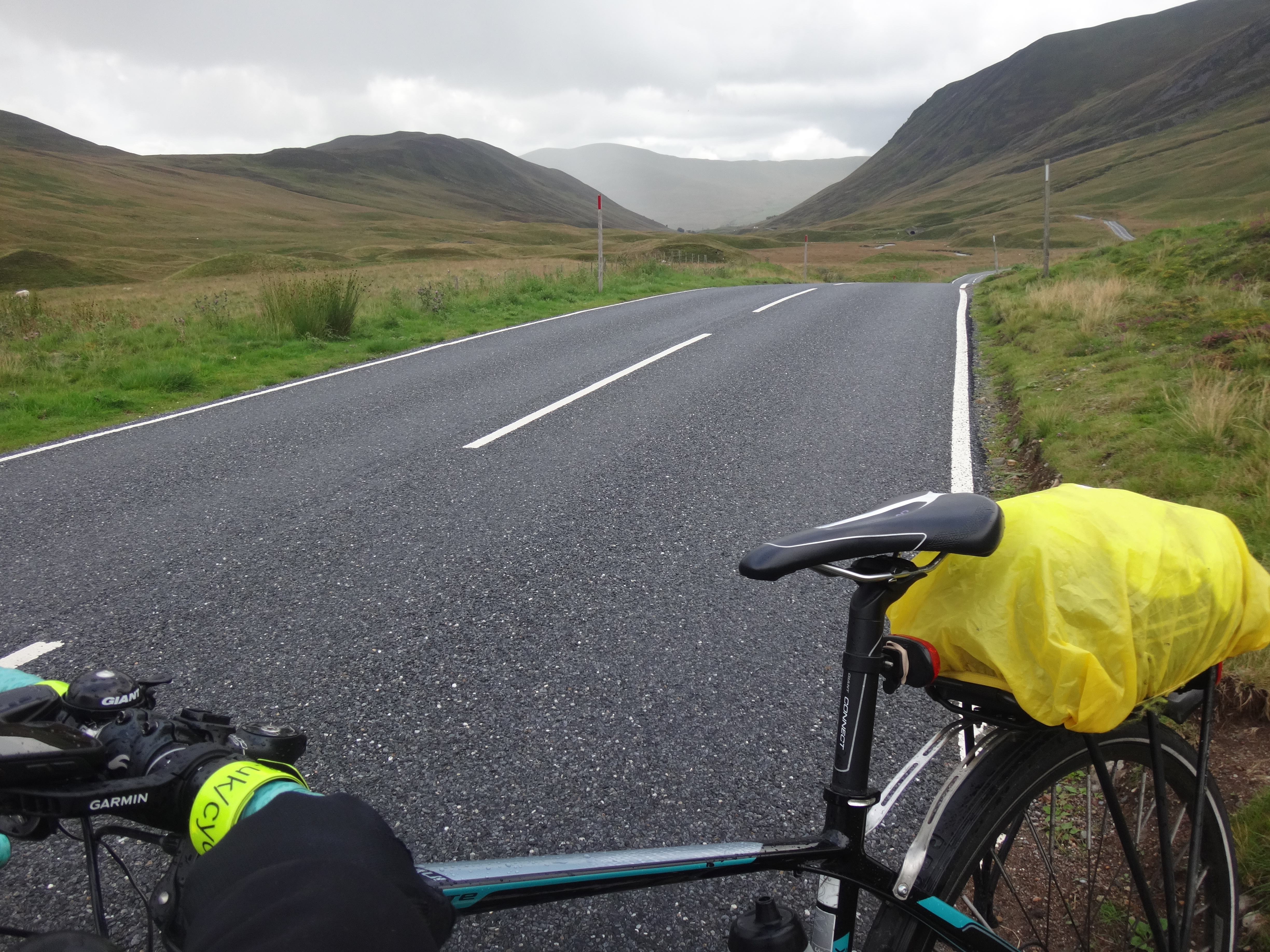
The incentives for the next day were very different. No mountains to conquer, no brother at the next food stop. Just a headwind for 50 miles, with a slight but very definite incline for most of it. It was soul-sapping, especially after the elations of the previous day. For most of this day, my incentives were ground down to a fine dust. I didn’t have the energy to hold on to any greater ideas. Each grain of incentive was the thought of not giving up. Thought Again. And again. Eventually the incentives trickled by, the hours of peddling passed, and the sea was finally seen!
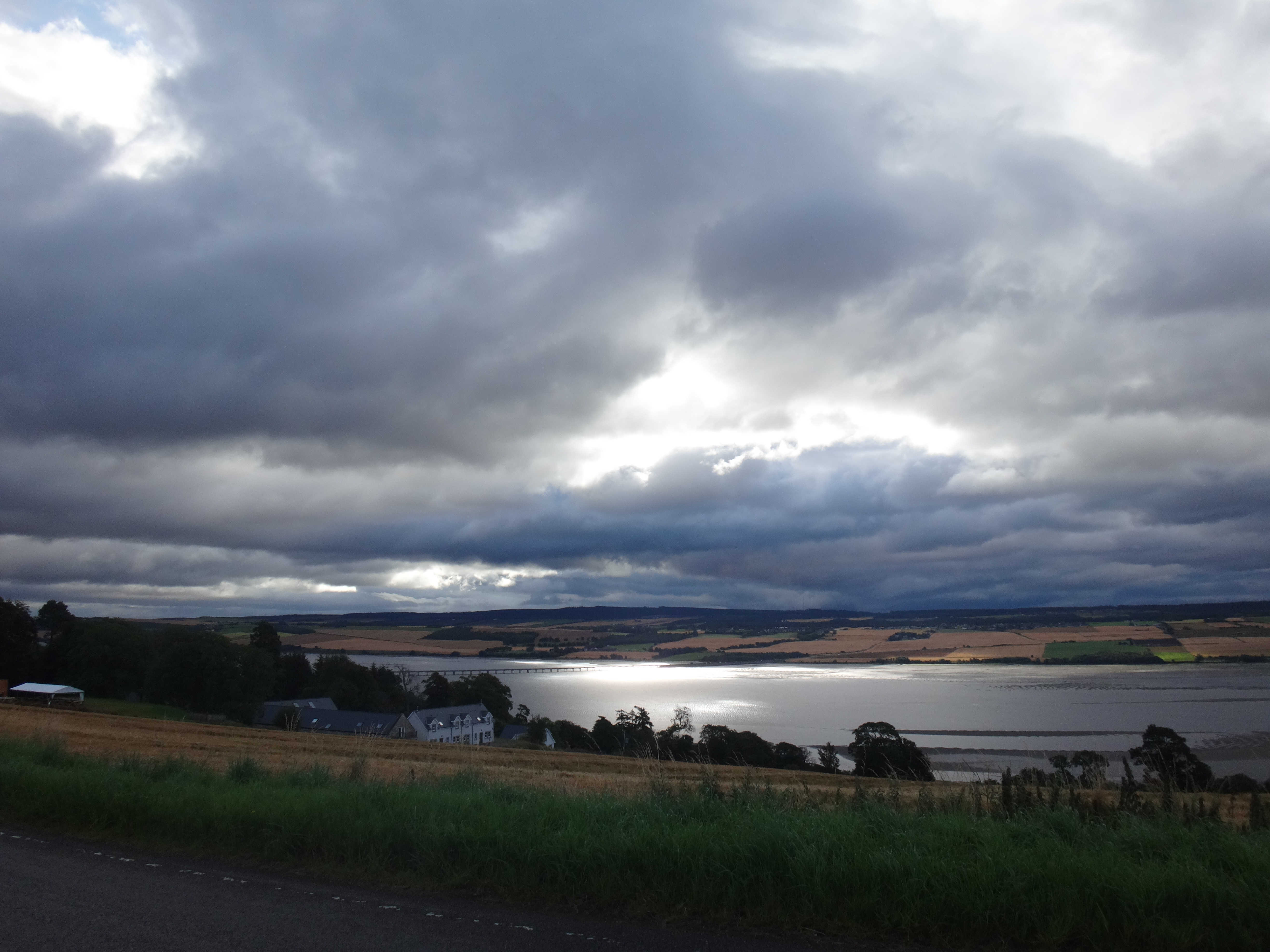
The sea! At the other end of the country from Falmouth!
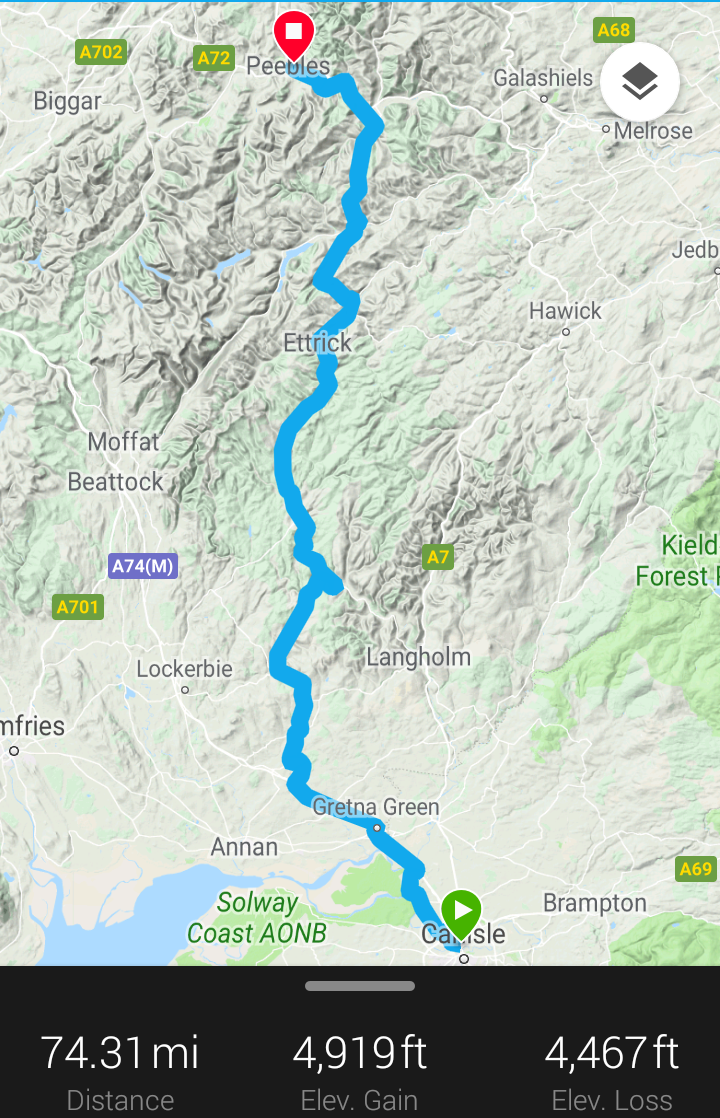
What day is it? Everything is blurring into one… the extremes stick most firmly in my memory, and so I’ve decided to write on the theme of opposites on the journey from Carlisle.
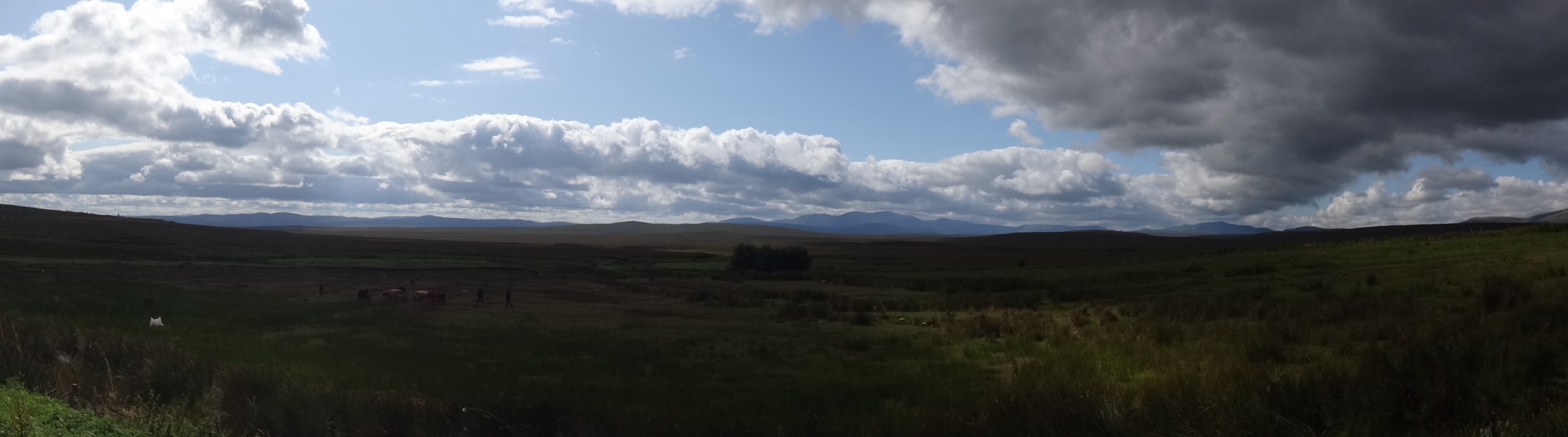
Where England felt warm and quaint, with golden hay, red brick buildings, and sunburnt legs, the Scotland that appeared after that belt of storms feels cool and stark, grey and proud. So far I’ve been pummelled with rain, soaked through with missle, blown dry by winds, and been treated to bright sunshine with distant views. I’ve glided along the smoothest roads and been shaken to bits on crumbling tarmac. I’ve cowered under the glowering glare of hills greater than any I’ve seen in Cornwall, but have cycled up them on roads lacking quite the same ferocious steepness of the Cornish dips and tucks. The hills are longer and the descents all the more satisfying. My bike gears are coping, but I’m ramping up the self-distraction to keep my legs patiently cranking along in full view of the summit that doesn’t seem to be getting any closer.
These two images are before and after the main climb of today. The photos alone don’t quite get across the opposites of cold & damp and warm & dry that bike and I rode through within a couple of hours.
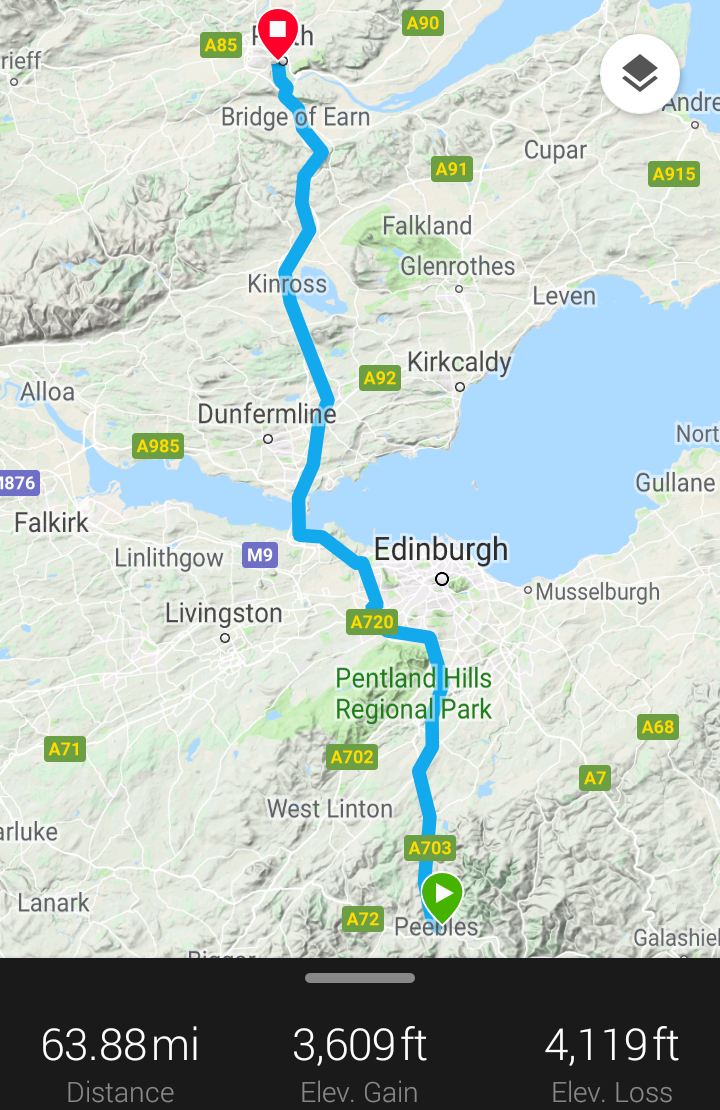
All these experiences do leave the poor body and mind reeling. How many layers is a good idea? How much food should I eat now to stay warm and cycle up the next hill? The ride from Carlisle to Peebles was wet, but at least it was consistently wet. I wrapped up in my bright yellow waterproof jacket and a slightly-different-bright-yellow waterproof trousers, and stayed like that all day. I looked fabulous! Today the layers were on and off in a stream of colours depending on the wind, the shade, the sun, the rain, the gradient, and the altitude.
What I’ve found interesting to note is how the ups and downs of the weather and route don’t necessarily correspond with my mood. A full day of rain or a long climb in the cold are miserable and hard work, but at least they are recognisably miserable hard work and my mind can turn to a solid forbearance. Short climbs and shorter cycling days should be easier and restful compared to the tougher days, but they are hard work too.
Grim forbearance shouldn’t be the default mood when the sun is shining and the hills are ‘easy’, says Rational Mind. Emotional Mind sometimes couldn’t care less if the sun is shining.
Every day is hard work and every mile counts, even if some are ridiculously tougher than others for whatever rational or irrational reason.
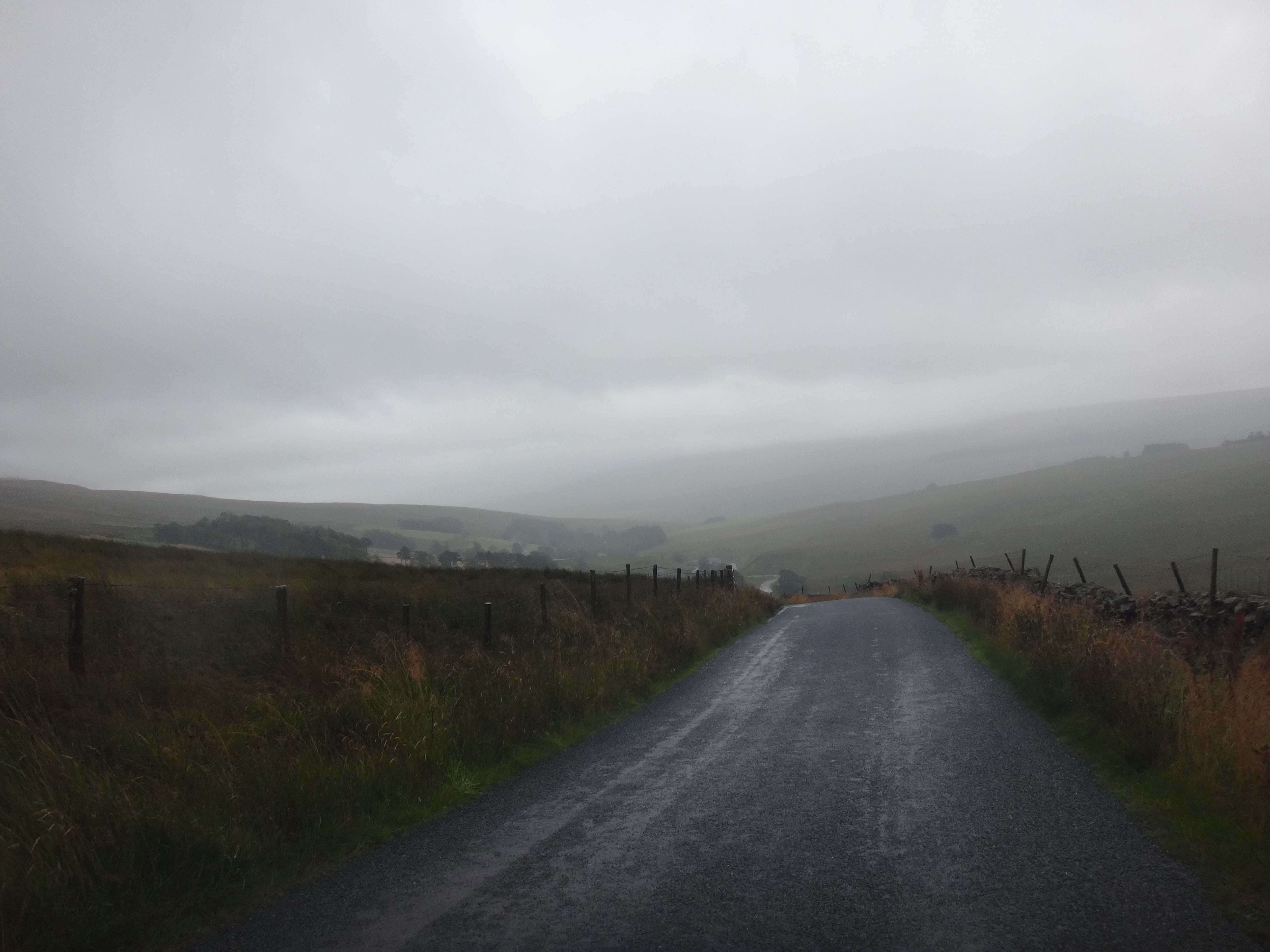
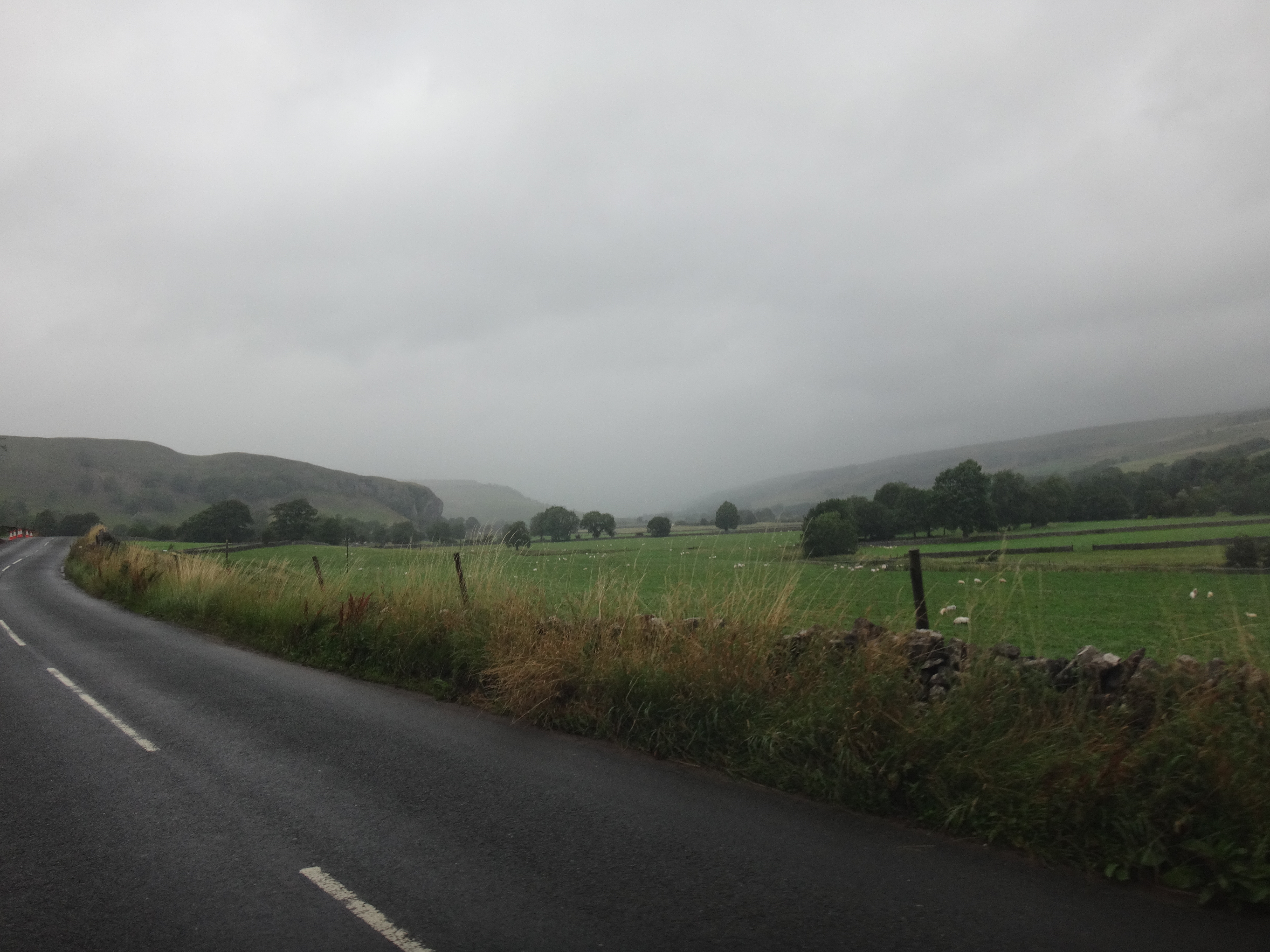
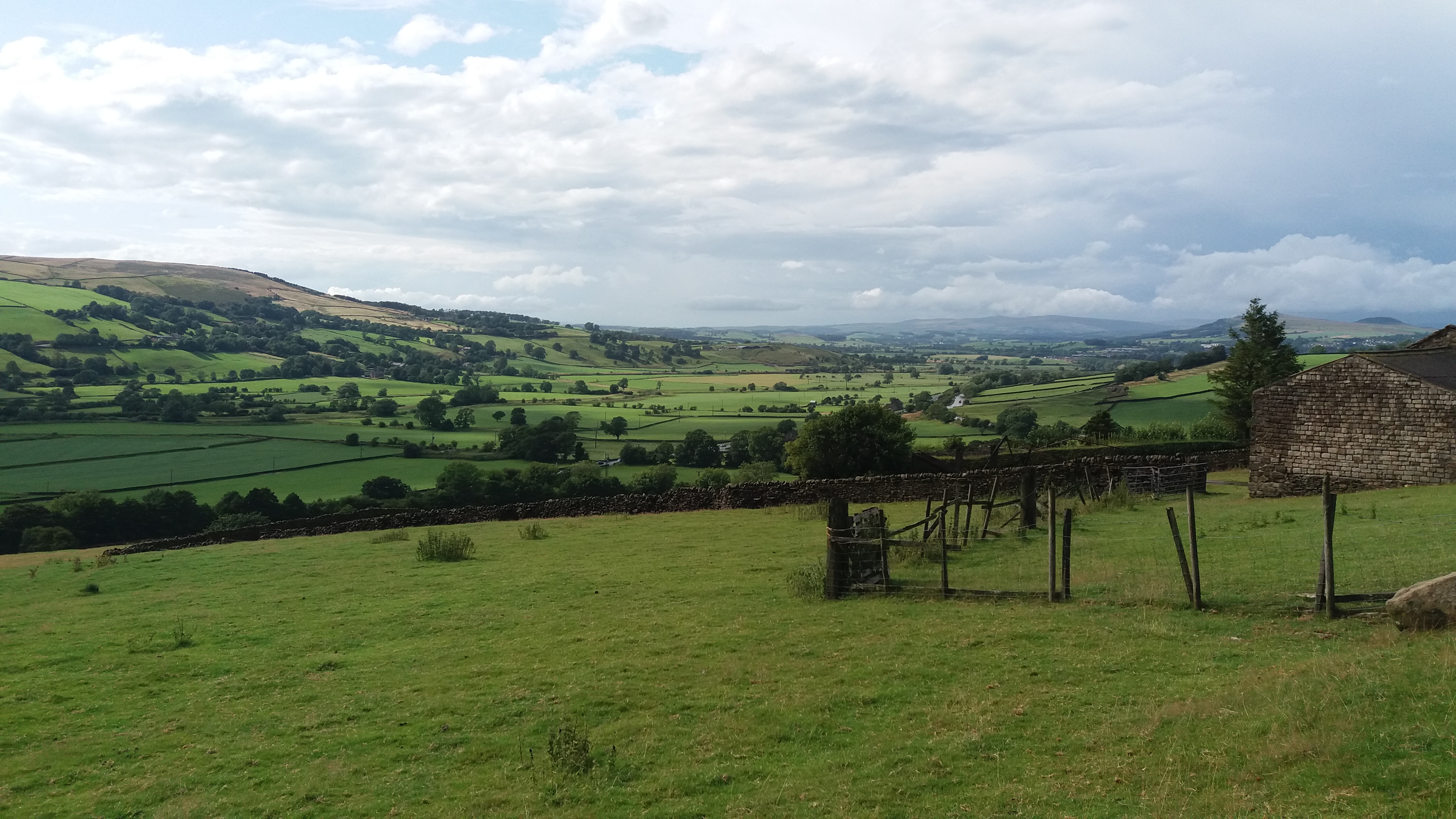
Today was a Hard Ride. I was going to write a nice nostalgic post about all the memories I have spending time in the Yorkshire and Cumbria landscape with friends, getting drenched in low clouds and missle, drinking tea to make it all better… I certainly felt very much at peace with the world for most of yesterday and the first part of today when the rain poured down and a blustery wind pushed us up the last of a hill so big and aloof that we could hardly see through the fog at the top.
Part-way up the biggest climb of the day
But no. Today’s ride turned to fury. After about 70 miles of incessant, steep little climbs that don’t even register as Hills of Significance on any proper cyclist’s radar, I’d had enough. Absolutely enough. That sort of absolutely enough where the only option is to stop and sob a little, however inconvenient that stopping place is. Mine was somewhere on the roadside, somewhere near the sort-of top of not-even-the-last ‘hill’ of the day. So stop I did. I very much wanted to give up right there. While working out how I could give up, I took off my steamy waterproof trousers and consumed some magic gel that the others on this ride swear by. These two things, as well as being spotted as lagging behind, gave me just enough of a prod to keep going a little further. Then a little further. Then came the fury.
What sort of a stupid ride was this anyway? Why was I still riding with sore hands and a sore bum and sore thighs? How dare there be another hill! And why, just WHY, was the road covered in rivers of water?! I was not having any of it. I stormed through those little lakes, cycling with both pedals fully submerged in angry defiance of their watery clutches. Sheer bloody-minded determination kept me upright. And so I finished this ride of 90 miles, damp, tired, and furious.
(One of those road lakes was being filmed as we passed through, so look out for an angry & sodden me on Sky News)
Anyone who has been around me over the last few months will recognise a similar pattern as I was trying to finish my thesis. Fury got that thesis written at the end. Not the destructive sort of fury, but a constructive one.
But, in a constructive conclusion, we’re about half-way now at nearly 550 miles. Tomorrow we reach Scotland!
Conquering things. Doesn’t that sound a bit lighter than the last two posts? There’s been a little lapse since the last one because conquering things is exhausting. From the last three days of cycling, I’m now close enough to Manchester to watch the planes taking off as little lights in the distance. Manchester. From Cornwall! That’s over 300 miles of cycling!
And my poor frail body is feeling every one of those miles… My thighs ache, I’ve scabs on my shin from when my pedal bit me, the other leg is sunburnt on one side only, my bum does NOT like the saddle AT ALL, I’m developing the most ridiculous tan lines that make it look like I’m wearing white gloves, and the palms on my hands look, and feel, like they’ve been whipped from gripping onto the handlebars for eight hours a day.
So on the theme of conquering things, I am still cycling despite these ailments (with the aid of many lotions and potions). It’s only physical pain after all. There are worse things. Five gruelling days in, and I’d still rather be doing this than be back on PhD work…
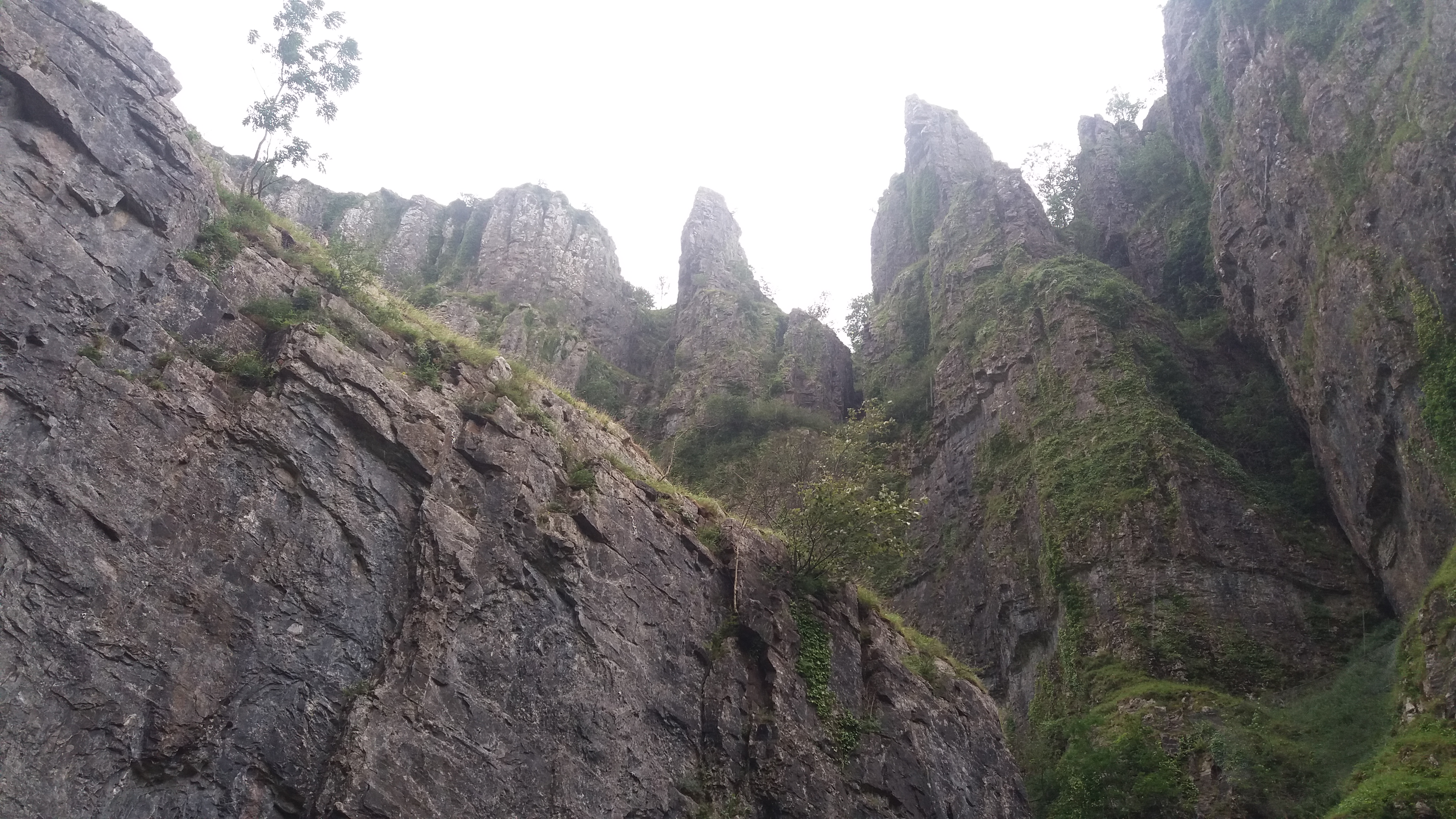
The Cheddar Gorge
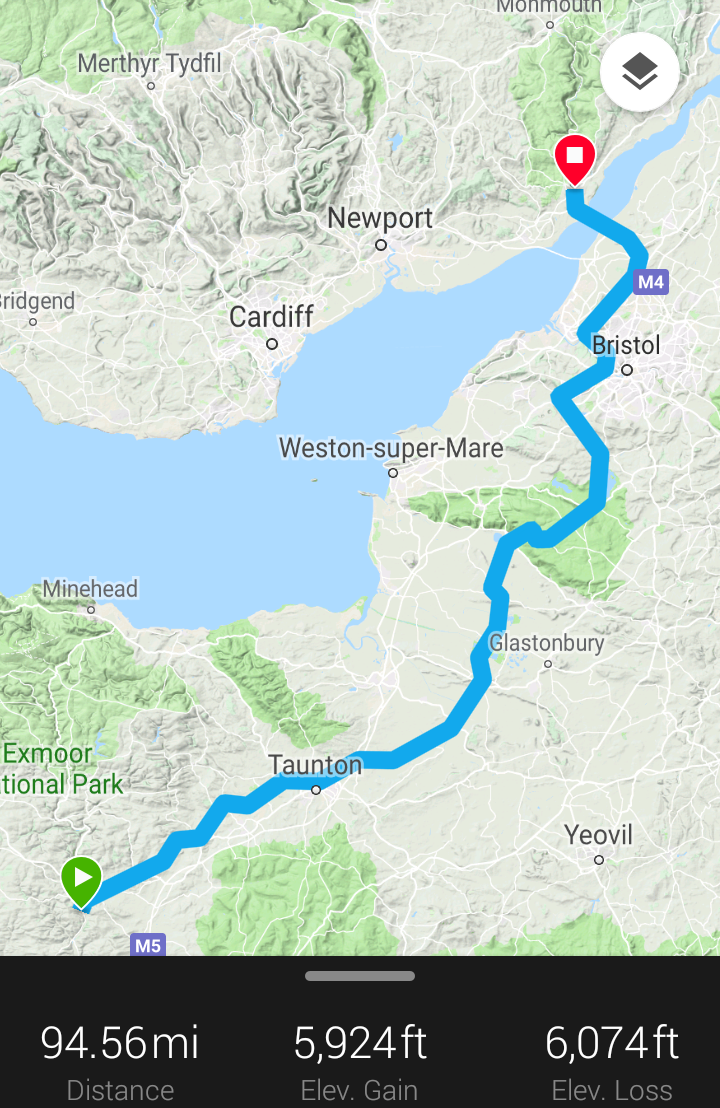
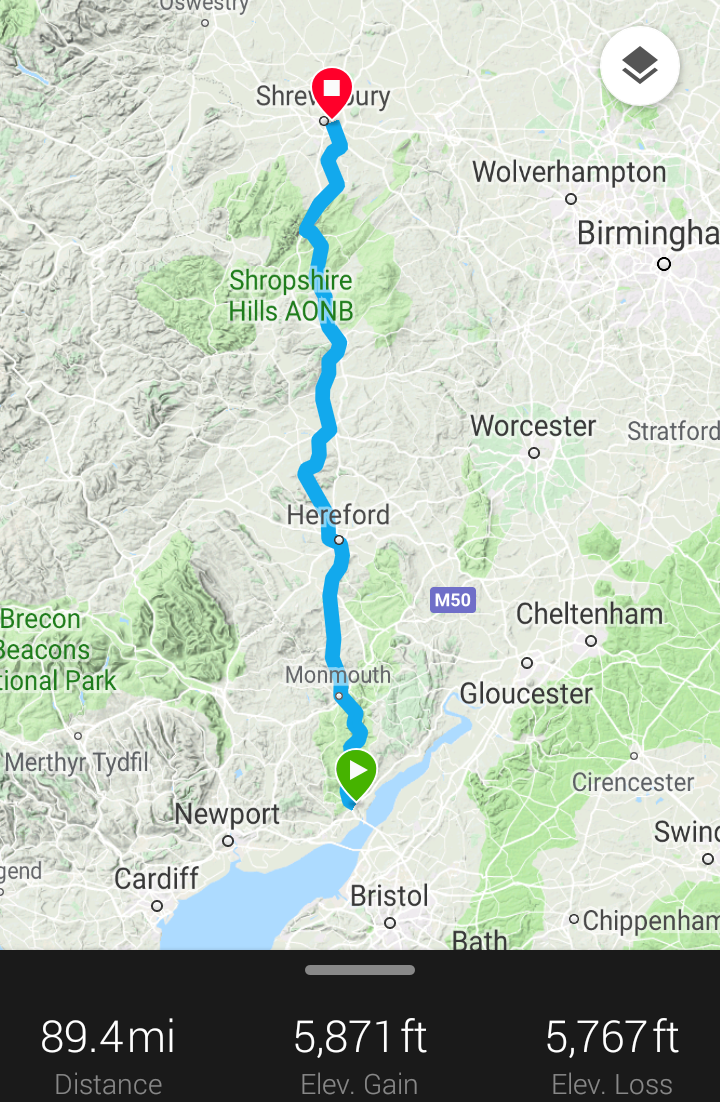
On day 3 we cycled up to Chepstow via Bristol. This day was significant to me for two very big conquering reasons. Firstly, doing a very similar route a few weeks ago is how I injured my knee last time. It was immensely satisfying cycling back over roads that I’d travelled before, but this time with a (mostly) functioning knee. Secondly, at 93 miles, this was my longest ever, ever bike ride in a day. It took AGES. Day 3 of 93 miles was swiftly followed by day 4 of 89 miles to Shrewsbury, which is my second longest ever, ever bike ride! Double conquering, to add on to the consecutive conquering of all the other days cycling.
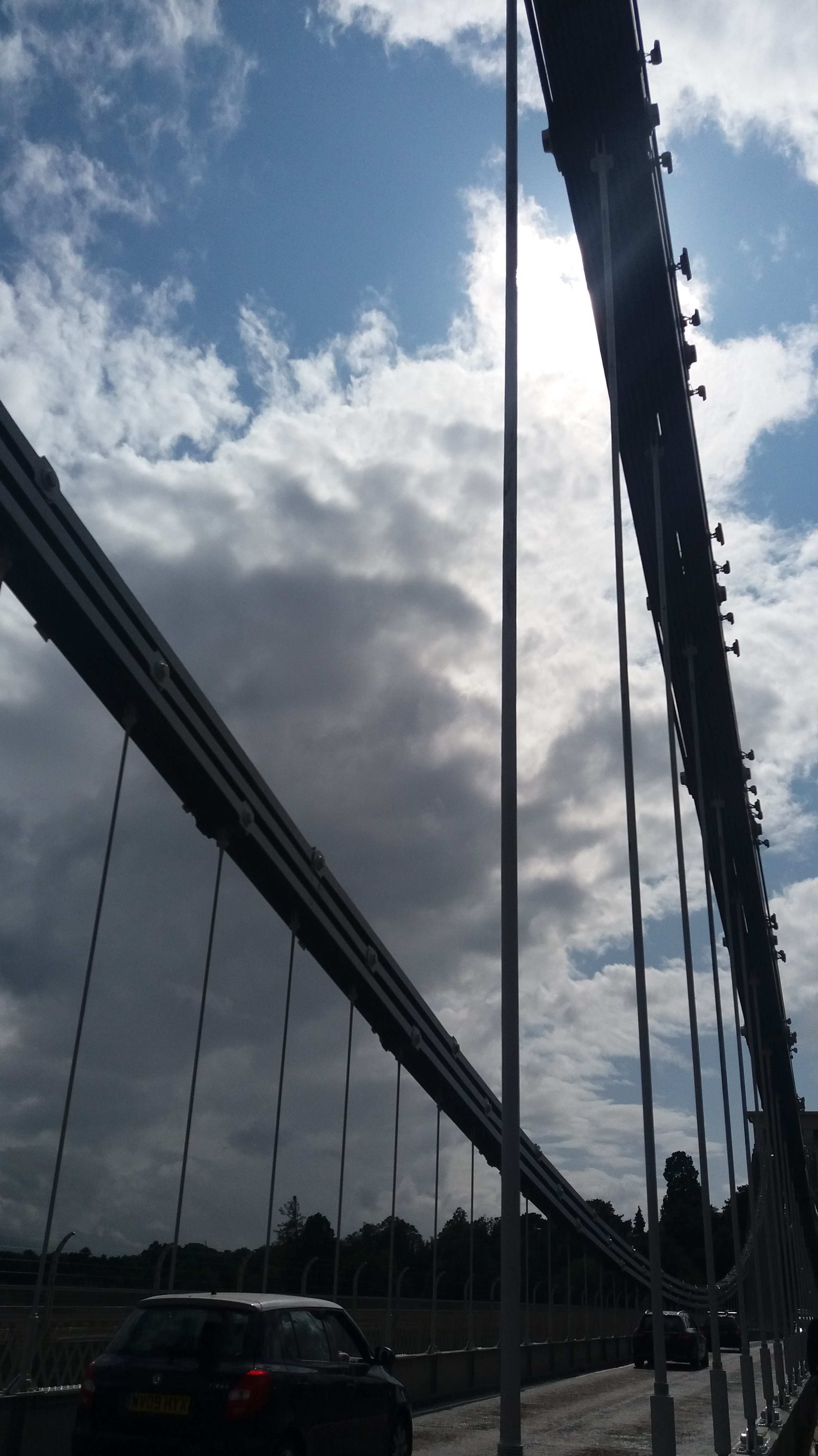
The Severn Bridge with a speed limit of 15mph for cyclists (ha!)
The country is beginning to feel bigger and smaller at the same time. There’s all sorts of places and villages and farms and hills that I had no idea existed, but we’ve already travelled so far!
This blog post will be on the theme of fear. Although there would be plenty to write about describing the last two days of cycling, I shall get bored relaying it all. So, this will be a thematic tour of the UK and the first theme I have chosen is ‘Fear’. Fear covers the first two days of cycling because there was much to be afeared of, and because I was too tired to write anything yesterday.
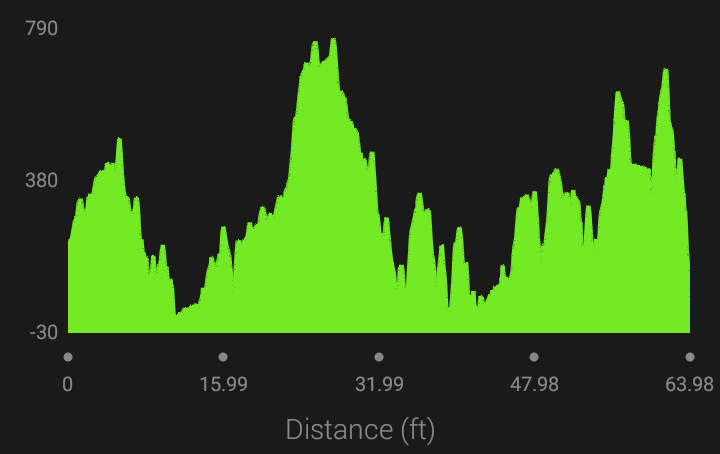
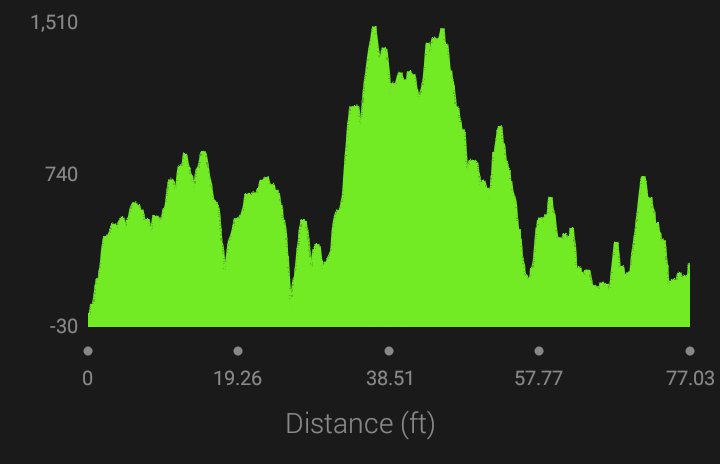
Over the next two weeks, I, and a group of others, are attempting to ride from Cornwall to Scotland. As any reader of the previous blog posts will know full well, I have spent the last few weeks mending a knee injury and have done very little actual cycling. So, you may understand my trepidation of beginning this ride in my beloved but very hilly Cornwall, will a day up and over Dartmoor to follow. For scale, here are the elevation maps:
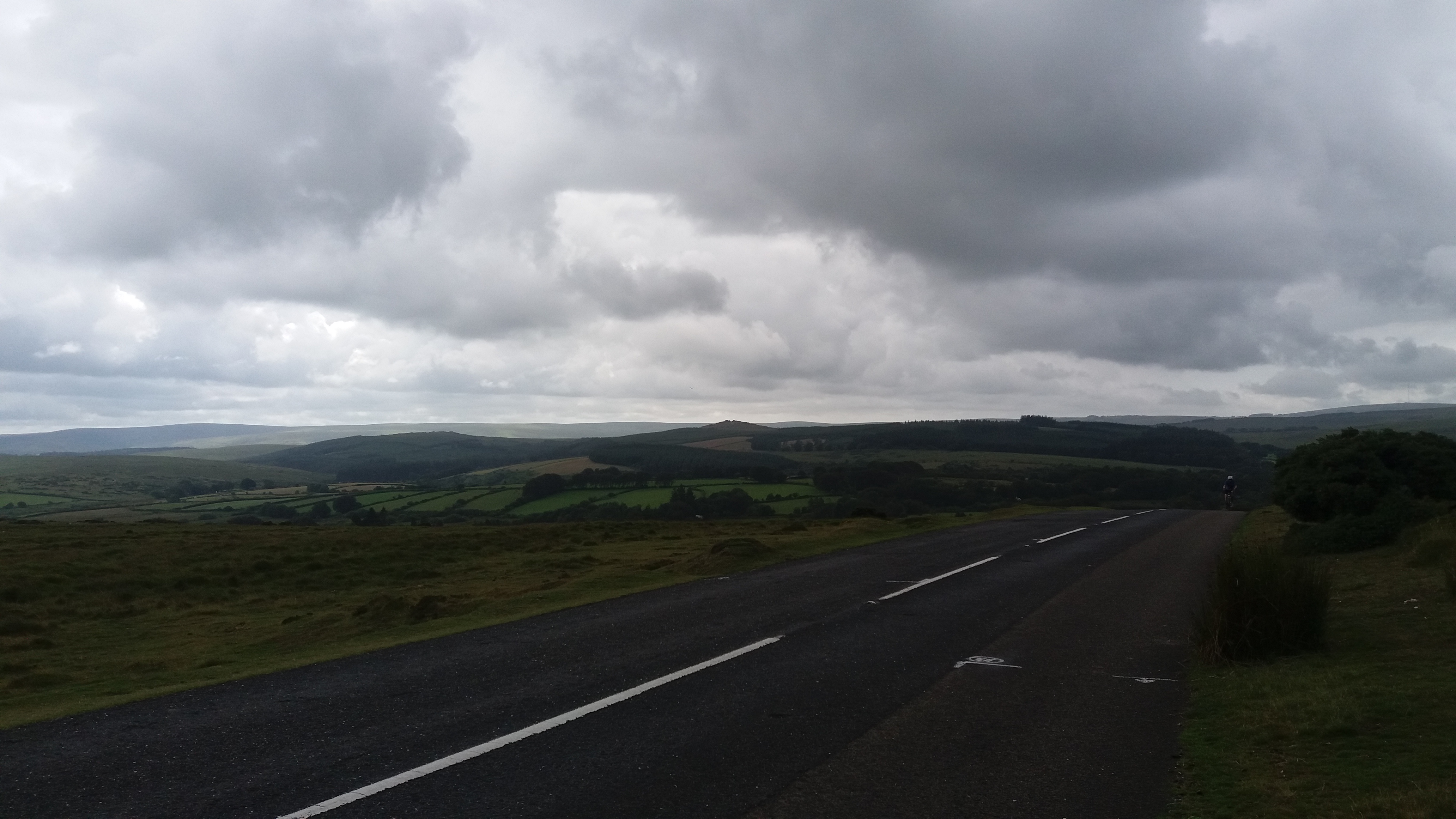
Don’t they look like menacing jagged teeth? Day 2 (on the right) is apparently the hilliest day of the whole journey. That high bit in the middle with the two little ears is Dartmoor. But these elevation maps lie. Dartmoor, for all it’s jagged steepness, was not nearly as cruel as the hills into and out of Truro on Day 1, or that last pointy bit at the end of Day 2, which just would not end! Dartmoor swoops and flies. Dartmoor will be kind to you if you pick a comfortable gear and allow yourself to get distracted by the peaks and folds, by the bursts of sunshine and moving rain shadows, by the sheep and ponies (who do not care how fast anything in the world is moving), by the heather and gorse and bumblebees. Fear of that big hill which was going to take at least half an hour to climb (someone said) was far worse than actually riding the thing.
Somewhere up that big Dartmoor hill
Fear of pain has been a big battle for me over the last two days. The memory of getting stranded in Glastonbury unable to walk and the weeks of repair is still quite raw in my mind. These two days have been long and hilly and I could have ended it on Day 1. When the knee started to flare up again after only 10 miles I thought I’d had it. Gone. Should have been sensible and not even attempted it. But, knowing now that the pain is caused by my own wonky-muscle usage and not some greater ill, I kept going and kept adjusting my position, and kept my stretches up. Most importantly, I decided not to fear the pain. Fearing the pain makes all the other muscles tense up and accentuates the wonkiness, and therefore, in a self-fulfilling circle, increases the pain. Miraculously, the pain lessened substantially after the first food stop. Perhaps not coincidentally, we also rode over my home turf from that food stop onwards: my cycling haunts with the Falmouth Wheelers are concentrated between Marazion ad Truro, so we were riding hills I knew I could do because I’d done them many a time before.
I hoped the same trick of bending my mind around the fear would work today, and it did, a bit. But where mind games are not enough, a little top up of ibuprofen seems to nudge the pain away.
So here are a few pictures, just for context, and for comfort that even really scary things are often scarier in your head than in reality:
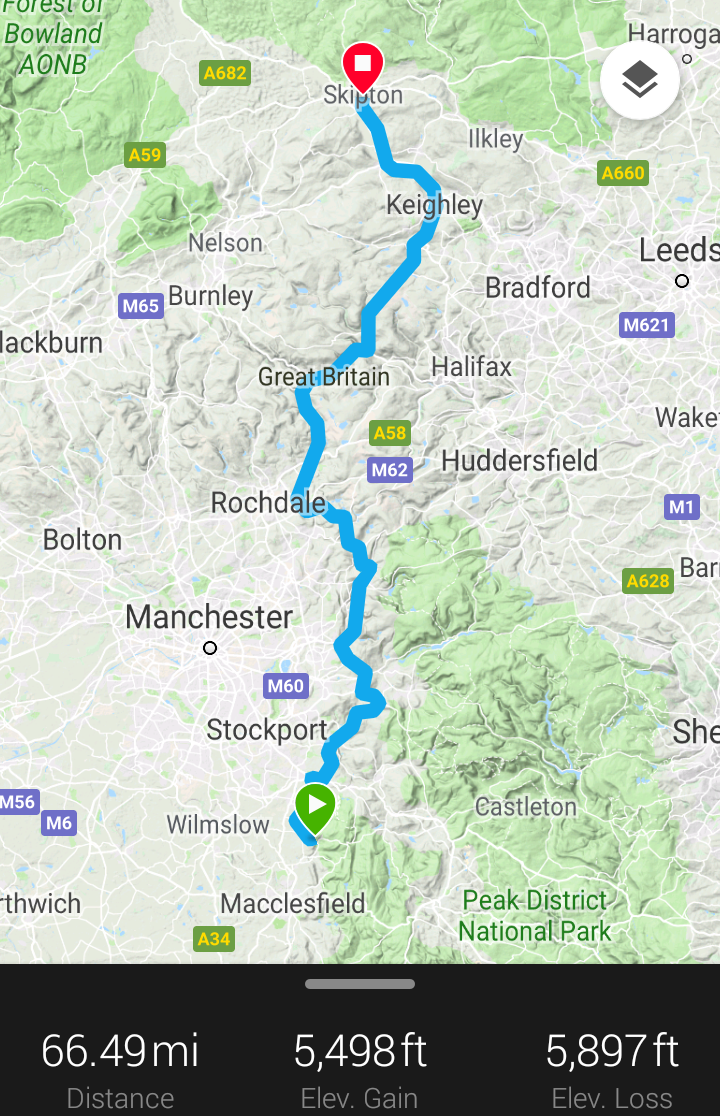
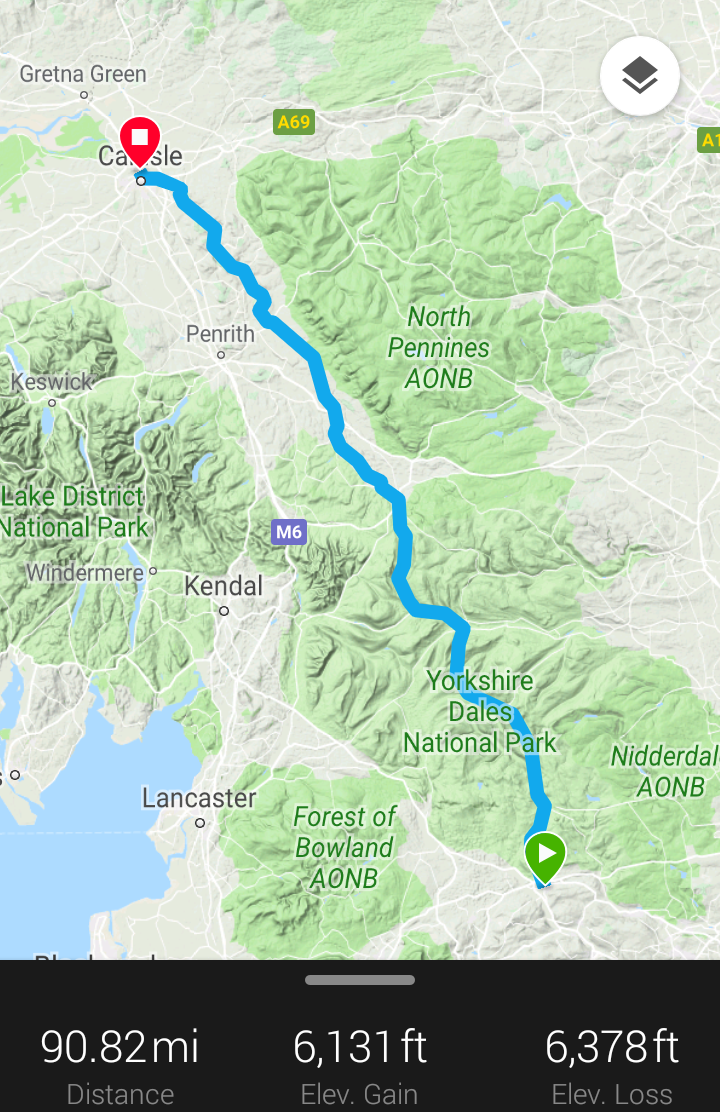
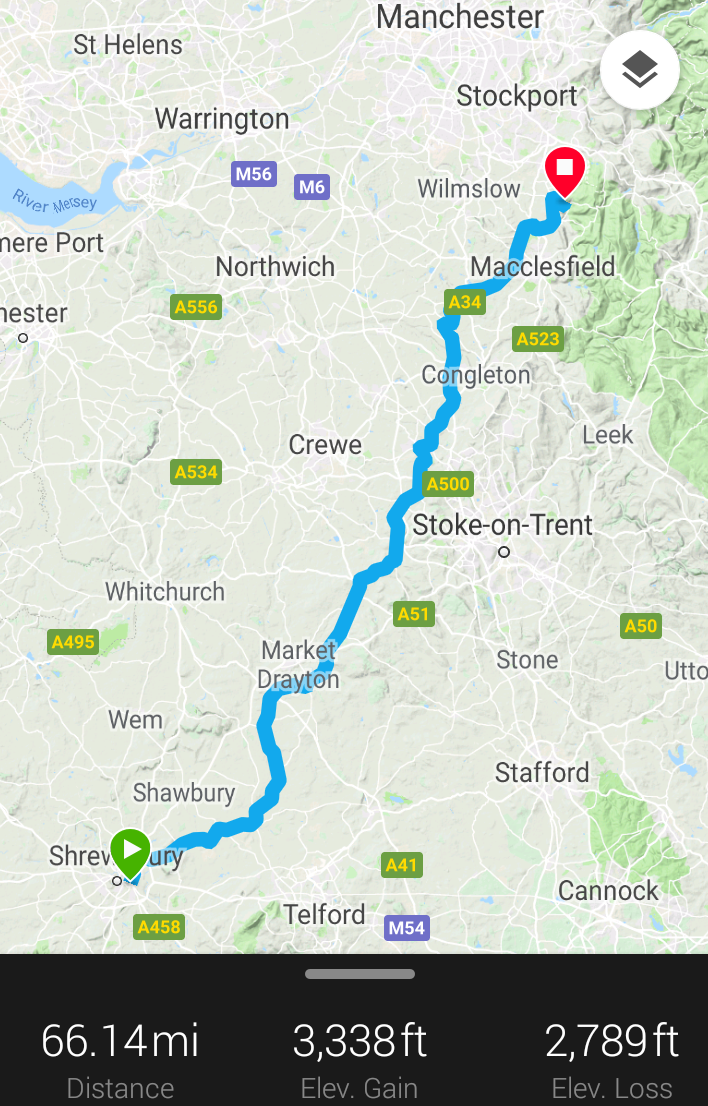
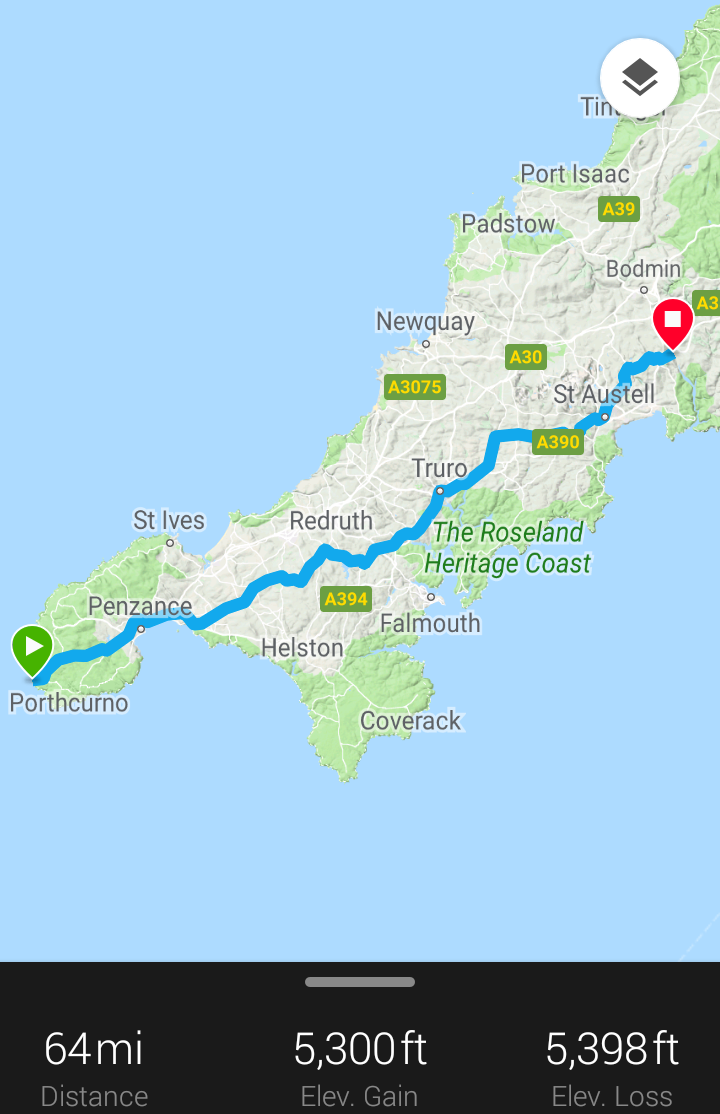
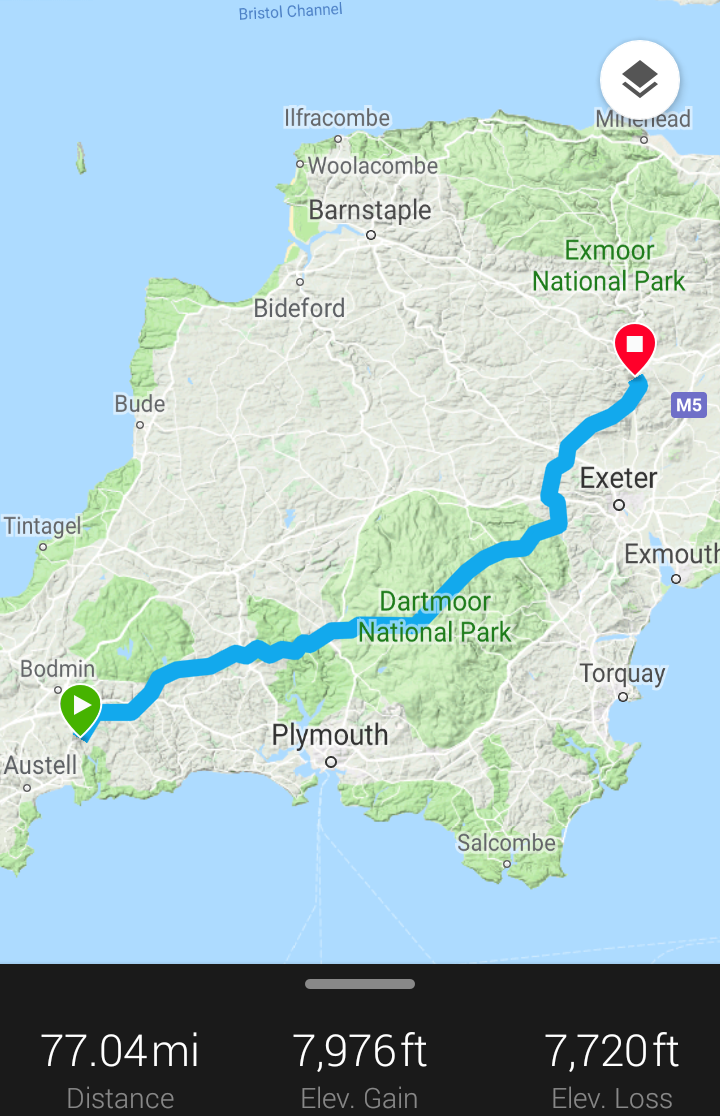
And here are the actual routes (because they look really far and I’m mighty proud of getting so far!)
To fail or not to fail, what a question is that? Failure is one of those horrible, dirty words that leaves tremors in its wake and a foul taste in the mouth. I only have a couple days left before leaving on my longest ever cycling trip, planned months ago with dreamy eyes and hopes for adventure… so, just before departure, my thoughts and ambitions are now turning to doubts and fears. What if I don’t make it? What if my knees once again buckle and I am immobilised? What will everyone think if I have to give up?
Need I say, these things are not helpful to dwell on. So, I’m going to digest those fears a bit and make them more palatable.
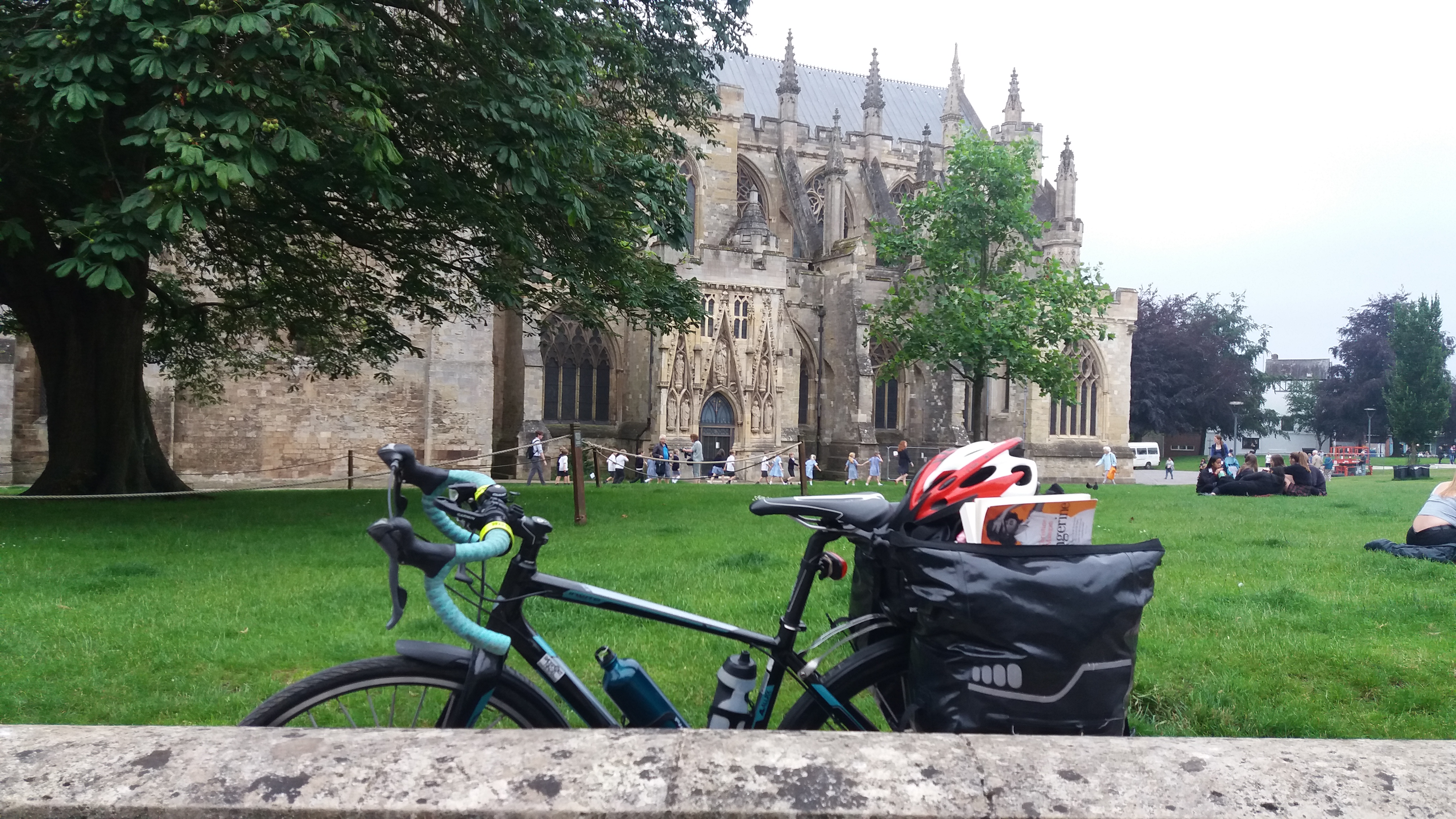
A picture of failure. Bike and I are resting by a wall at Exeter Cathedral before hobbling to the train station for a speedy return home (see Home from Home blog post for the story of this trip). Painful as failure is, it did at least allow me the time to devour another book (the one perched on my pannier).
Failures can be tricky beasts to deal with. Having recently finished a PhD, I am very well versed in feeling the doom from impending failures of all sorts. Failure to finish on time. Failure to get the computer code to run. Failure to write the perfect thesis. Failure to dedicate time to friends and family. Failure to wait till after 12pm for my lunch break with everyone else… (but I was HUNGRY at 10.30am, ok??).
Try as I might to deal with these failures with ever more ambitious plans, I learned the hard way that perfectionism is a feeble weapon to wield. I’d attempt to face one failure head on, battering it with my Stick of Perfectionism, only to succumb to another failure sneaking up from behind. The internal monologue might go something like this: ‘I’ll tweak the wording here to make it a bit more perfect… just a bit more… and here, this isn’t right…‘, then suddenly realise that I’ve not spoken a word of non-work to anyone for a week and my meals have turned into a series of snacks. Then, realising this, I’d launch into making a meal-plan with designated times to socialise. And then, inevitably, feel guilty for not spending enough time working. More control is always the answer, right?
Mmm… perhaps not. Attempting to craft the Perfect Stick of Perfectionism is an easy trap to fall into. I can say from experience that instead of fending off failure, you’ll most likely end up with a mighty pain from the whittled-down Thorn of Perfectionism and a guilty ache from yet another list of not-done to-do’s and topsy-turvy priorities. Thus, the weapon of choice against failure becomes another failure to dislodge. As you may understand, the experience can be overwhelming and really not great.
From the trials and tribulations of surviving a wretchedly difficult PhD, I’ve learned a few transferable ideas:
Number One: other people’s ideas of failure do not have to become your idea of failure too.
This is an extremely important one. If you’re worried about something, give it a prod to find out why. Is it because of external expectations which you have set upon yourself, or is it a failure of your own creation? My fear of not completing this long ride is in part because I’d be disappointed in myself and don’t want to miss out on a great adventure, but more because I’m worried about admitting my failure to other people. There. Failure identified. So instead of defining this ride by an unhelpful ‘finished/ not finished’ dichotomy, I’m going to re-frame it. For me, success will be giving it a go and being brave enough to stop if it is unwise for me to continue. Failure will be pushing myself beyond breaking point, even if that point comes along on the first day. I’ve done as much as I can to fend off that particular failure with training and physio over the last many weeks, but who knows what will happen! Either way, I shall have something to write about.
Number two: failure means you’re learning.
Some failures are unpredictable. Some failures stick around and glare at you, wherever they came from. Some failures build on failures, tumbling over failures. But there is a way to deal with them. It isn’t easy. It can be downright uncomfortable. But you can try to accept them. Feel those failures morph into companions when you give them a good hug. Every one of those failures will arm you with an experience to learn from and shape who you are in some, small way.
In a somewhat lighthearted example, my many, many computer coding failures shaped my work and came out in force when I was defending my thesis to my examiners. So it ran (on repeat, for three hours):
Examiner: ‘Why didn’t you do […x…]?’
Me: ‘Tried it, didn’t work.’
Learning from failures is life, yes?…
Me: ‘I’ll just ride this bit further, it’ll be fine.’
Also me: ‘Remember last time when you did that and you […insert: ran out of water/ ran out of food/ damaged your knees/ got lost/ had to fix a puncture by yourself on the roadside/ etc…].’
Me: ‘Yeah, but it’ll be fine this time, because I’ve got: […insert: extra supplies/ extra training/ extra experience/ damn luck/ naive optimism/ a map…]!’
… Me later: ‘Huh. Well, I didn’t expect […insert: another unforeseen problem to try and avoid next time…].’
Failures happen to all of us, all the time. There is very little point in making monsters out of them when they can become powerful allies in dealing with whatever else confronts you. So, should this big, long bike ride turn out to be a terrible idea, I will at least learn why it might be a terrible idea and maybe come up with less terrible ideas in future.
Number three: some failures are unavoidable.
Quite often, doing one thing will mean failing to do another. In deciding to write this blog post, I am failing to finish packing. But not writing this post means leaving my fears of failure unarticulated, lurking in the back of my mind.
Each choice comes with it’s own multitude of failings. No choice is perfect. Ever. No matter how much greener that grass looks over there where that other choice was.
I do firmly believe, even if I sometimes forget it, that indecision can be the greatest failing. Not doing things out of fear of failure means missing out on all the things which don’t fail and learning from the things that do. Of course, choosing to do nothing is sometimes the most sensible option. But dithering is not choosing. So accept that you will fail, choose your failures (see Number One), embrace those failures (see Number Two), and go. It’ll be fine!
As one of my very best friends has been telling me for years: you are free to fail in any way you choose. The options of failure are as wide as your imagination can make them! Isn’t that a liberating thought?
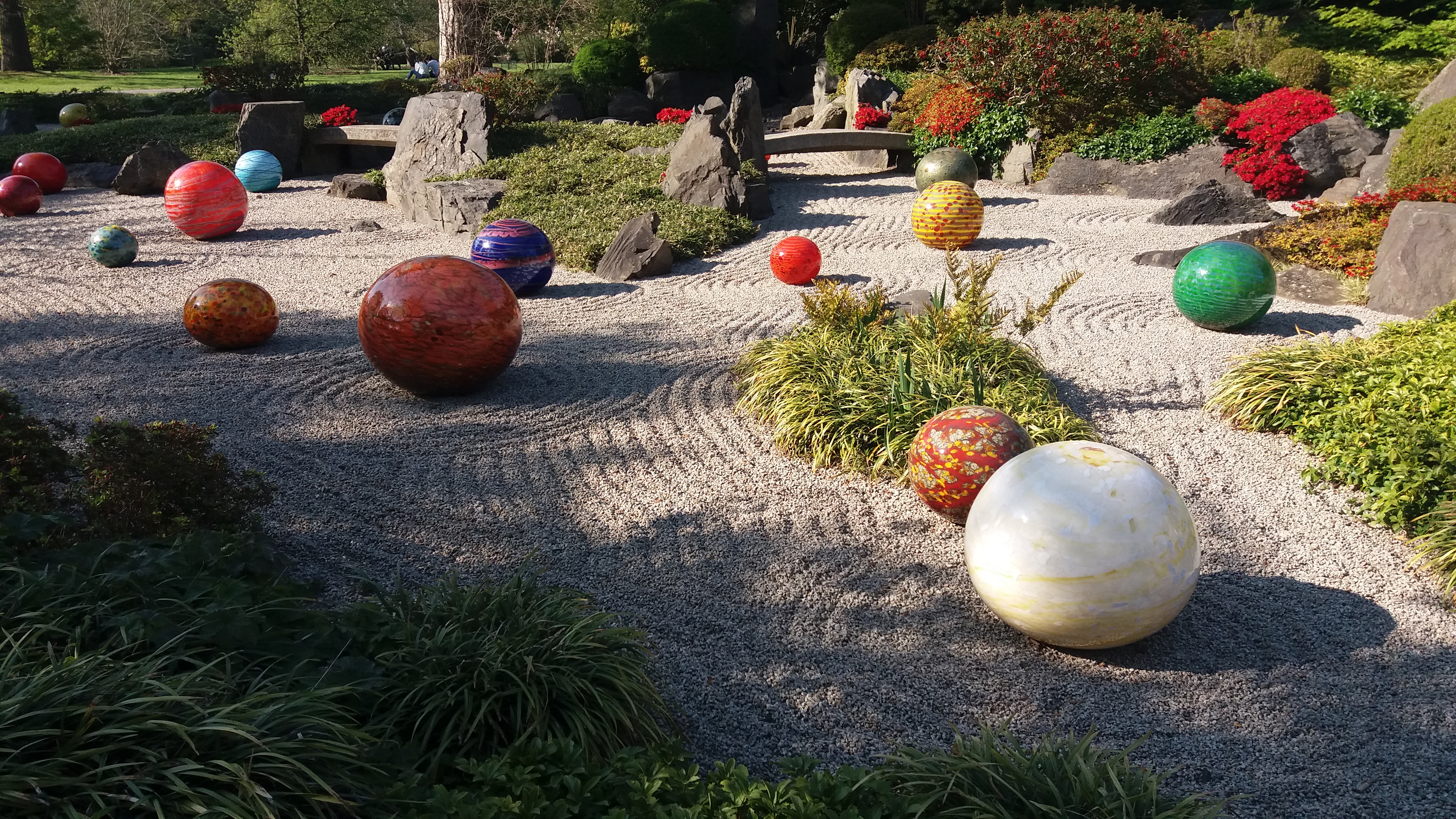
Here is a nice picture of some pretty orbs for you to contemplate instead of fretting over failure. Aren’t the beautiful! Just to note: all of them fail to be a perfect sphere, and all fail to be perfectly uniform. (They are on display at Kew Gardens until October 2019)
A bike, for all it’s roaming abilities, is a terrestrial creature. Wheels are only useful with a ground to roll against. With no ground, a bike will flounder. And yet, I believe it is possible to cycle on water.
Think of cycling, and I’m sure you’ll have a image of a bike in your mind. Two wheels (maybe more), main propulsion from peddling, that smell of chain oil and rubber so pervasive in bike shops, perhaps some brightly coloured lycra, if you’re so inclined. True. Fair enough. You’ve described a bicycle and rider. But not, I think, the feeling of cycling, the reason why someone might choose to perch on a narrow seat to force themselves up a hill with bugs sticking to the sweat on their face.
There are as many reasons for getting on a bike as there are cyclists to think them. But for me, cycling the closest I can get to flying on land. Oh the freedom from zooming along, far faster than a lumbering walk, with wind whistling past, feeling every drop of rain, every glimmer of sunshine… The people rushing to overtake me in cars are moving faster than I am, but in a bubble of their own. Too cold, turn the heating up. Look, it’s raining! Turn the wipers on. I’m bored, turn the radio on. Are we there yet?? You’ll get there, but without noticing that little bumblebee bumping into a foxglove, without the relief of breaching that really long hill and gliding down the other side, without getting too hot or too cold or soaked through, without the best-tasting cup of tea when you stop. And cars are really noisy! Have you noticed? Four fat wheels and a heavy machine just make a lot of noise rolling along, even if the engine is quiet. Not that I don’t get a little pang of envy when I’m passed by a lovely warm car for whom the headwind I’m struggling through is nothing more than a tickle. But I like that smug feeling of getting there by bike anyway.
Cycling for me is like flying under your own steam, with very little between you and the world around you.
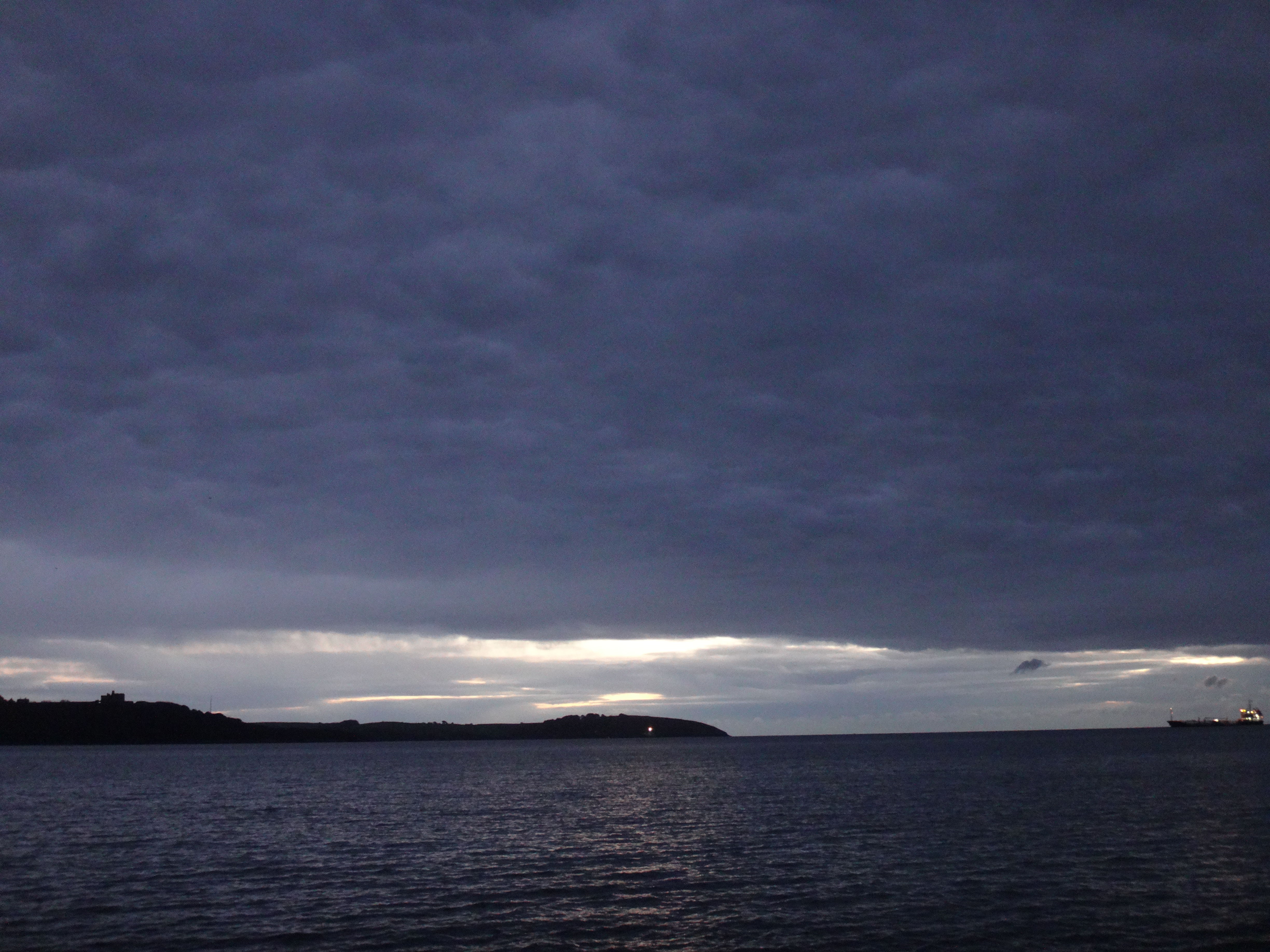
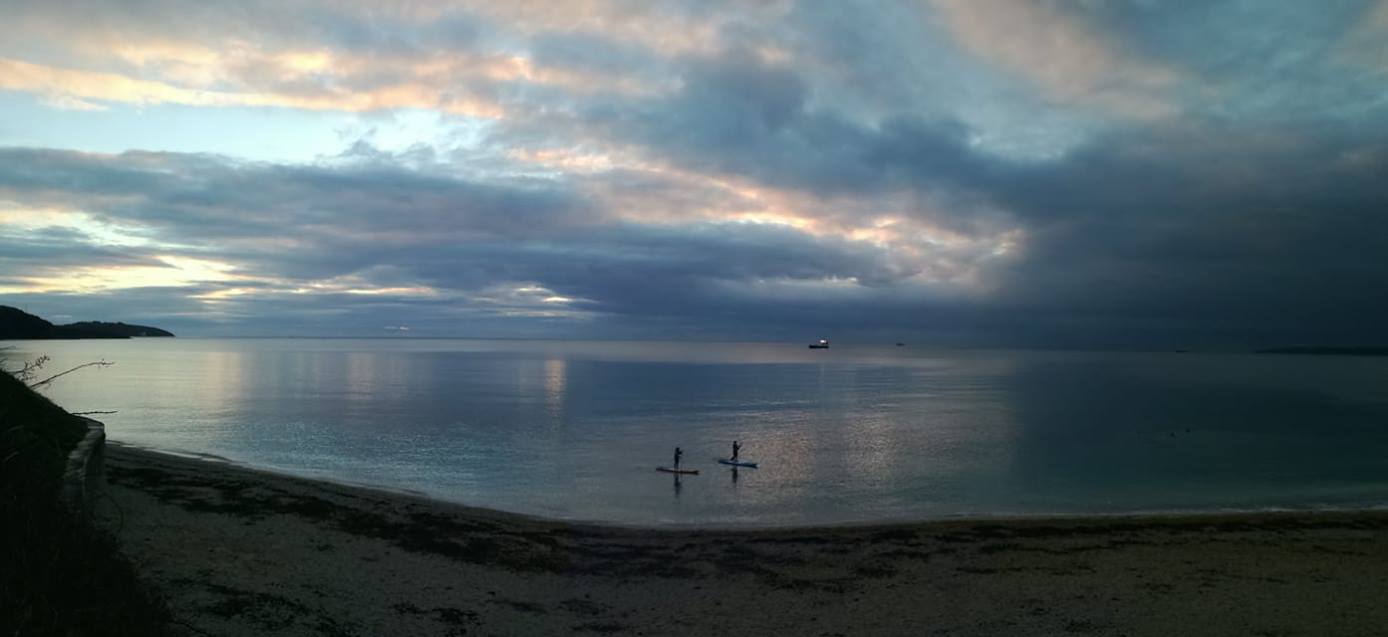
The view from an early morning, mid-winter paddle from Falmouth. Yes, it was cold.
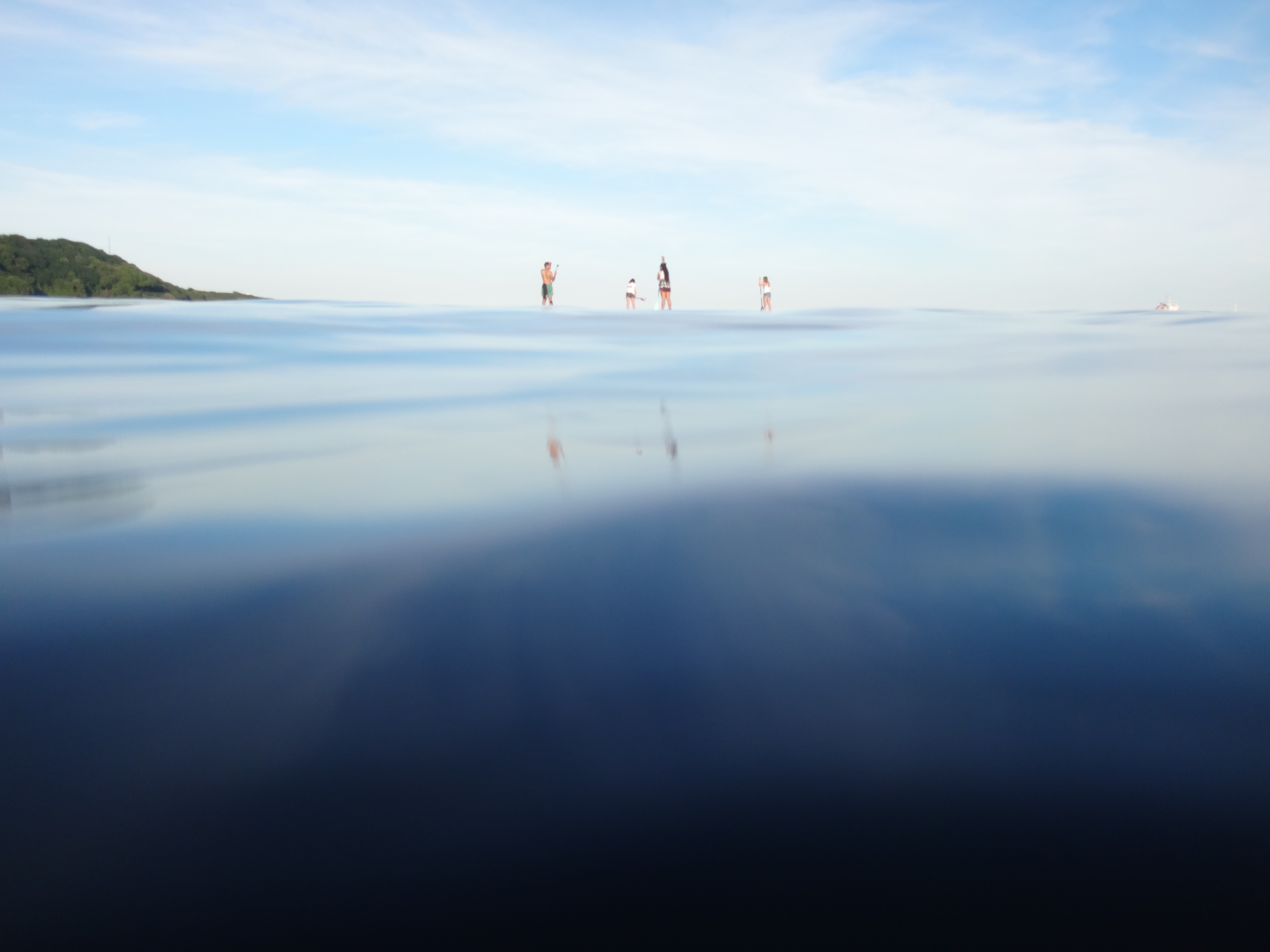
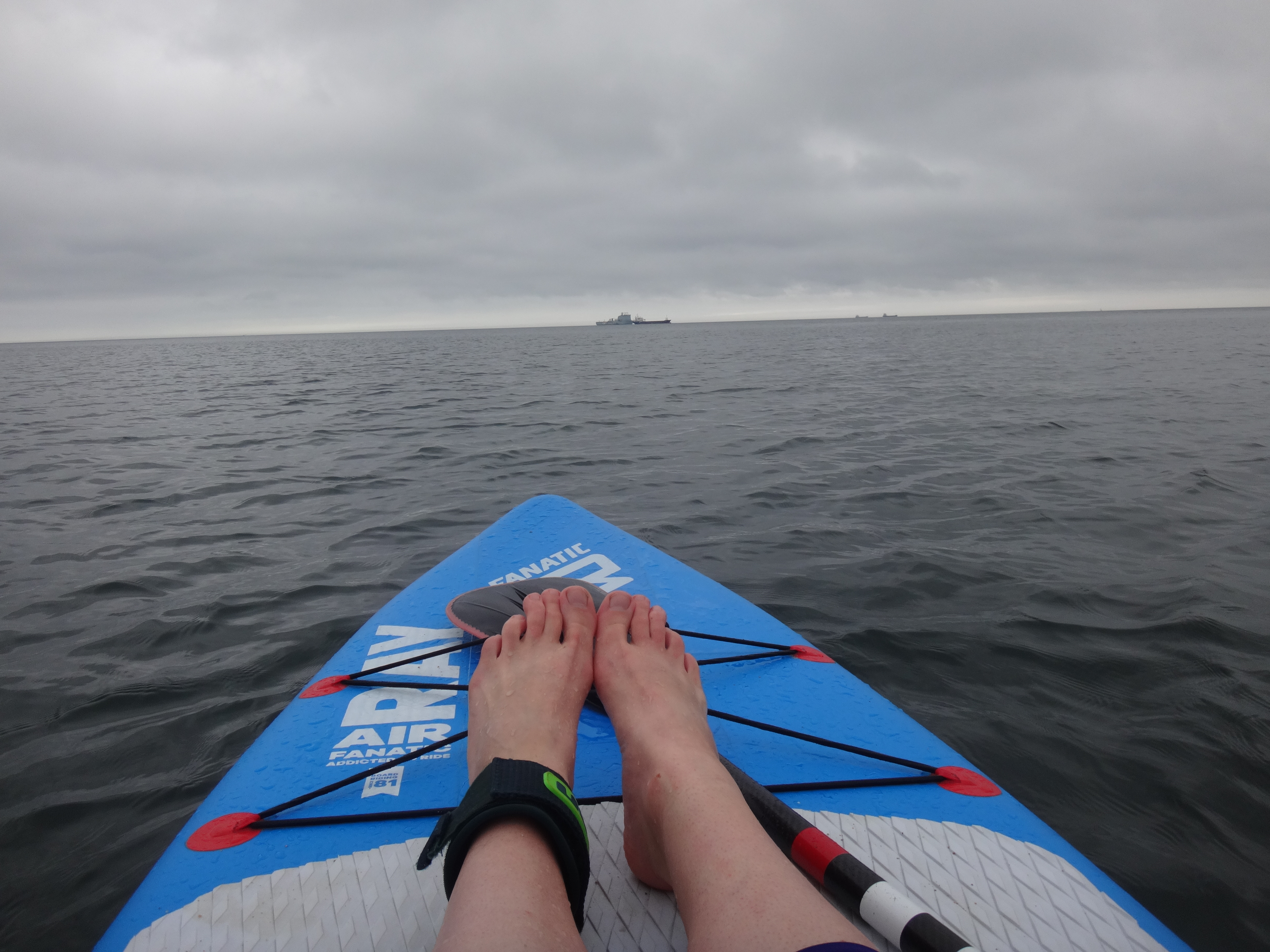
If cycling is flying on land, what is cycling on water like? What could give that same sense of freedom and vulnerability to the outdoors? Having lived by the sea for a few years now, I’ve decided that it is stand-up paddleboarding.
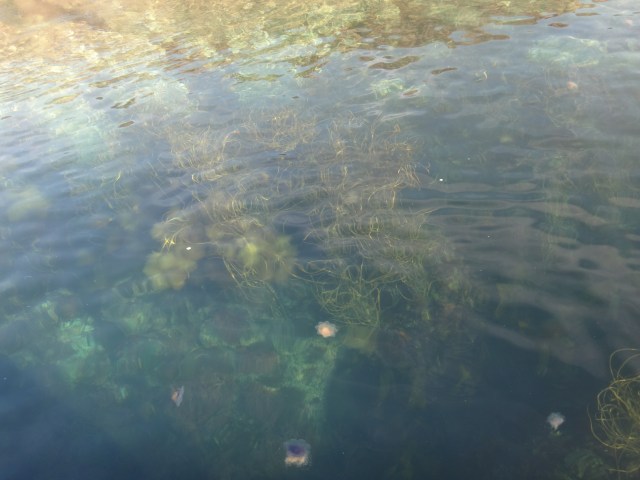
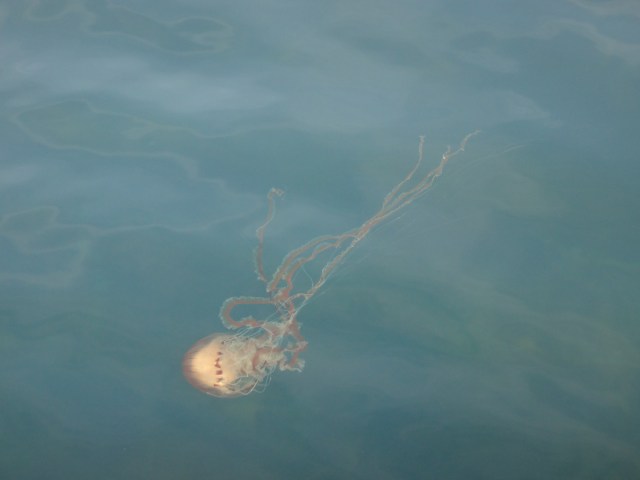
If you see someone in the distance who looks like they’re walking on water with a long stick and a sense of deep serenity, they are in fact standing on a board holding a paddle. It’s like surfing without getting battered by waves. Or like kayaking without the fear of capsizing. Or like swimming over the jellyfish and seaweed. And, most importantly, it is like cycling on water. Here’s why:
My friend Becky and I at the end of a sunrise paddle at Gylly, photo taken by Sara Mynott.
You can go places
Strap the snacks and waterproofs on to the bike or board, and go! Go for an hour, a day, many days…
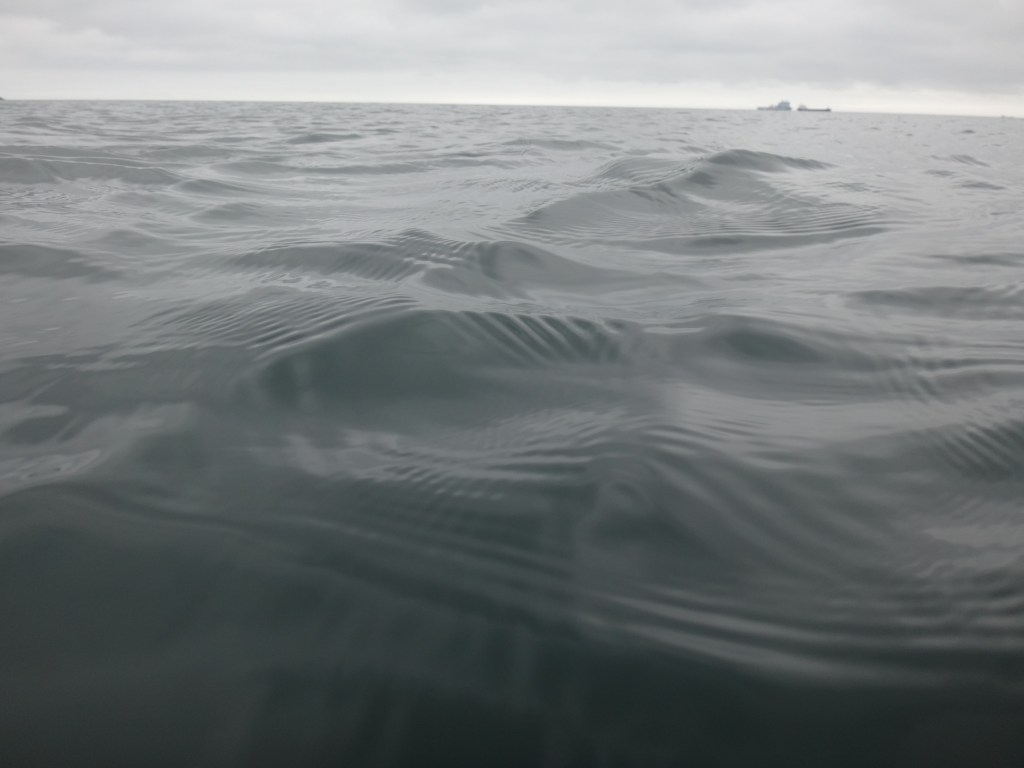
Paddle-cycling on a flat sea-road, I find my body takes on a rhythm of its own paddle-peddling. These are excellent journeys to gently ponder things, and bring friends along to gently ponder them with. But, hills are a bit addictive. They make you concentrate on the route rolling towards you (whether by wheels over land, or waves over sea). Suddenly you’re up, suddenly streaming down, and each hill-wave is a little different from the last. Every crest conquered will make the next one seem more forgiving. Besides, the changing scenery is a constant source of distraction for getting over those sometimes wearisome hill-waves.
The weather is fickle
The choice of journey isn’t always up to you. Sometimes it can be downright dangerous to be on a bike-board. A strong wind can stop you in your tracks or blow you off-course into oncoming traffic or rocks. Swell can quail the bravest of boards in a storm, and topple trees into the path of the sturdiest of bikes. But allow yourself to go out in anything less than dangerous conditions and you’ll notice how different that cliff looks in this weather, how blue the Cornish hedgerows become in May, how fun these hill-waves are now you know you’ve managed worse already… After a run of bad weather you’ll appreciate that sunshine all the more!
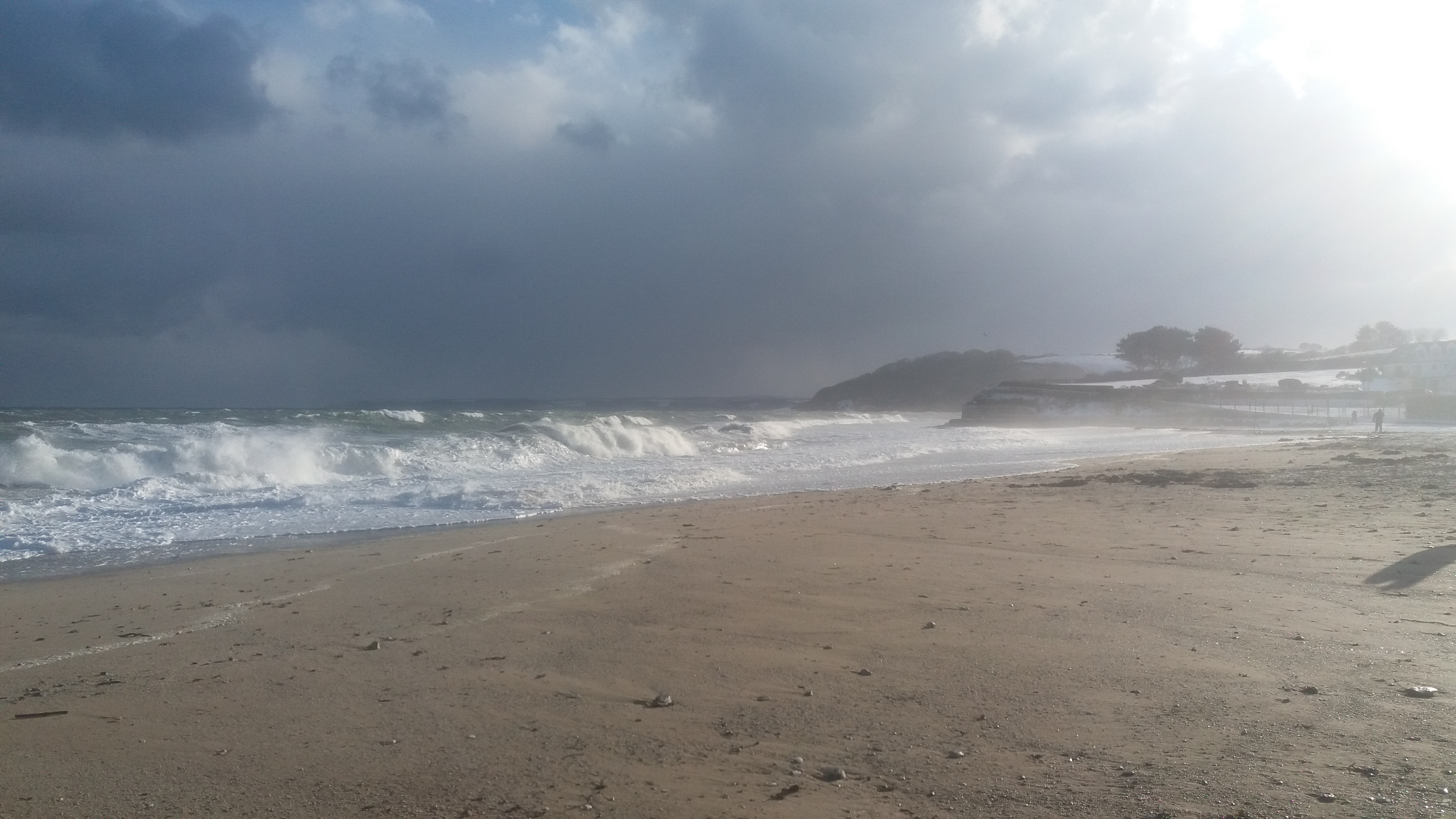
The end of the storm that washed chunks of Gylly beach away in Falmouth last year.
Find solitude or friends
Most bikes and boards are made for one, which means that you don’t need anyone else to go for an adventure. Of course it is sometimes nice to have company to share the weather with, whatever the weather. Other people have taken me on some of my longest bike-board journeys, with friendly chatter all the way there and back again. It makes that wider world just a little less scary if there’s someone with you who knows the way.
But sometimes keeping up normal conversation with other people is just too much hard work. Bikes and paddleboards are wonderful vessels for solitude without the ache of loneliness. Much like books, I think. Leap on your vessel of choice and fly away!
A little adventure, round Pendennis Point to the Sea Shanty Festival in 2018.
Complimentary?
Strong legs will get you further on both bike and board, and a sense of balance will help no end. But while cycling cultivates thighs like pistons and an upper body as solid as a table, staying upright on a paddleboard means straight legs, rolling hips, and an upper body able to keep up with banter from the sea (which is quite ideal for allowing my knees room to heal from excessive cycling)!
Cycling on water
Have I convinced you that it is possible to cycle on water? Or perhaps you’d prefer to draw different comparisons. Surfing is like downhill mountain biking. Sea swimming is like bouldering. Walking is like cycling and paddleboarding without the burden of complicated kit. Teams sports are better than lonesome solo adventuring anyway. Each to their own opinion, but I’ll politely disagree with the last one.
Whether cycling or paddleboarding (or any other ‘-ing’), each adventure is only one moment at a time. One turn of the pedals, one stroke of the paddle, one more breath to keep you going. Even the longest adventure is broken down into one moment, then the next. Some moments are horrible. You’re sore, cold, tired, don’t want to do this stupid thing anyway. But moments pass, even the good ones. Take them all as they come!

 ArchaeoCyclist